


Canada's economy just delivered a better-than-expected quarter. That is genuinely encouraging. It is not, however, a promise of cheaper mortgages next week or a signal to chase the housing market.
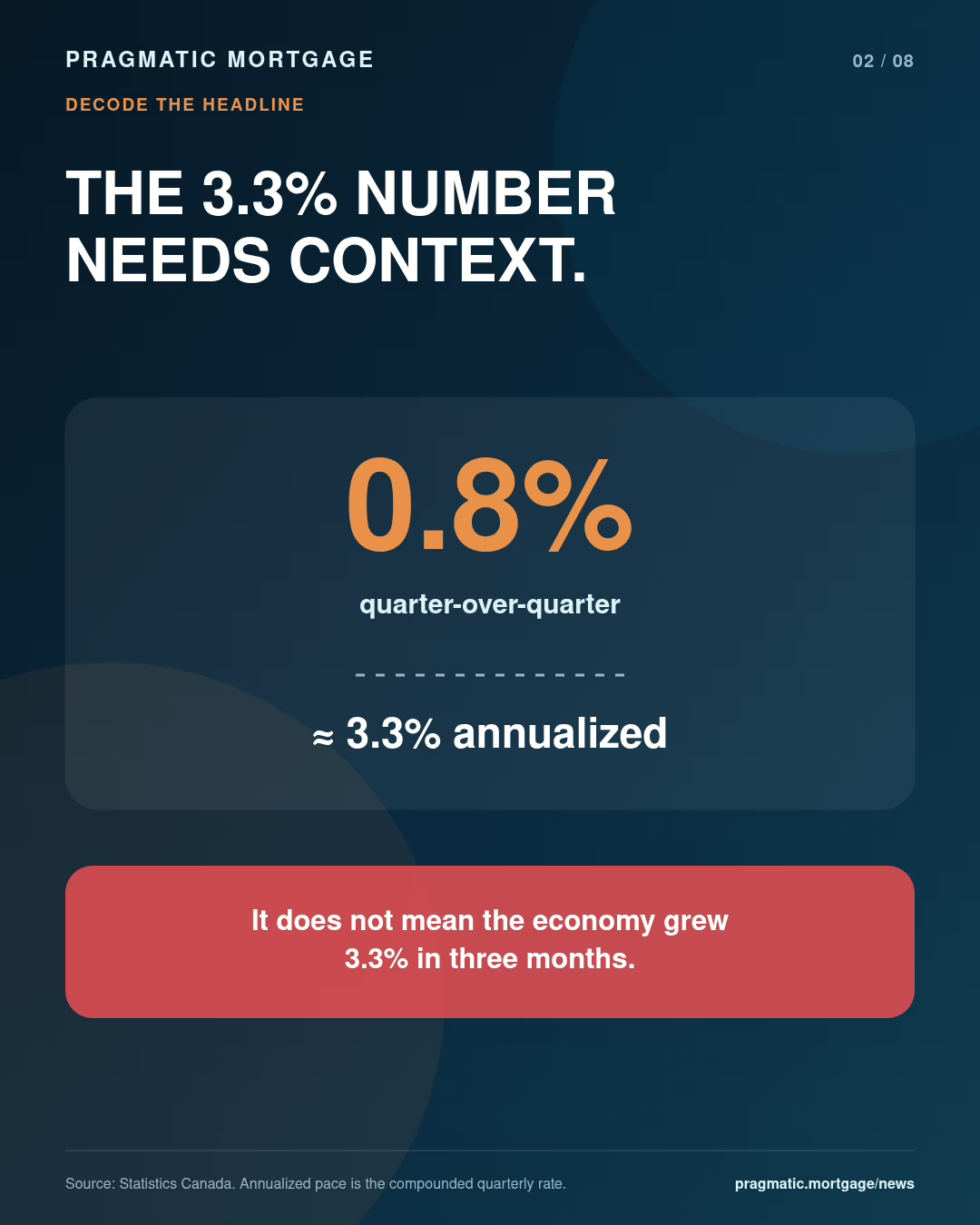
Statistics Canada reported that real gross domestic product rose 0.8% in the second quarter of 2026. Expressed at the annualized pace commonly used in headlines, that is about 3.3%.
The distinction matters: Canada did not produce 3.3% more output in three months. The annualized figure asks what the quarterly pace would become if it repeated for a full year.
The quick read
stronger growth lowers recession anxiety and can support housing demand, but it can also reduce the Bank of Canada's urgency to cut rates. For borrowers, the message is “prepare with better numbers,” not “rush.”
First, decode the 3.3% headline
The underlying quarter-over-quarter increase was 0.8%. That is the cleanest measure of what happened in the quarter.
The roughly 3.3% annualized number is useful for comparing the speed of growth, but it assumes the same pace continues. Economies rarely move in a perfectly straight line.
The composition was also stronger than the headline alone suggests.
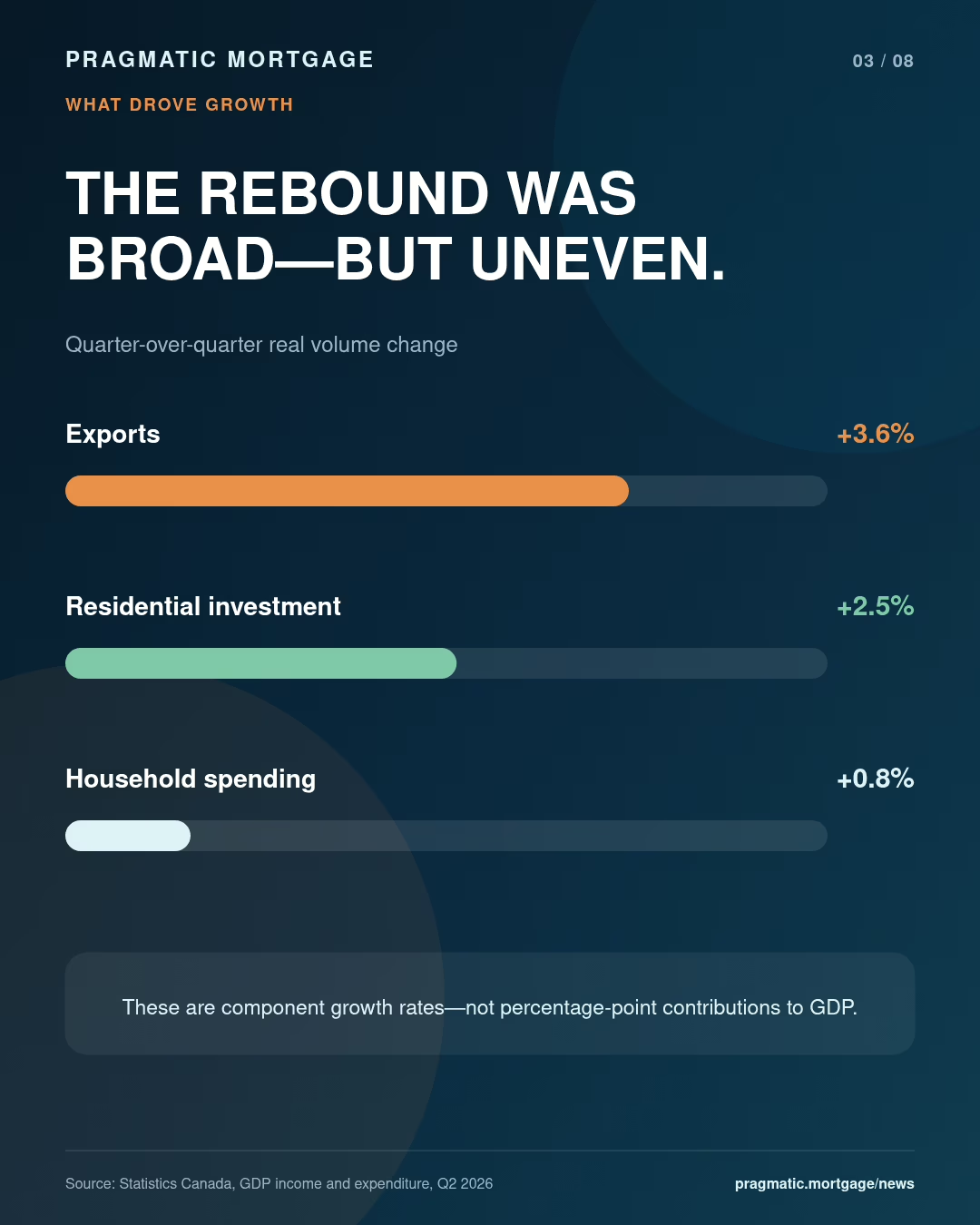
Exports rose 3.6%, their fastest quarterly increase since early 2023, helped by a 27% jump in passenger cars and light trucks.
Household spending increased 0.8%.
Residential investment advanced 2.5% after two quarterly declines, while new housing construction rose 0.8%.
At the same time, slower inventory accumulation subtracted 1.3 percentage points from growth.
Those are component growth rates, except for the explicitly stated inventory contribution; they should not be added together to recreate GDP.
Real GDP per person increased 1.0%, although that result came alongside a third consecutive quarterly population decline.
Household disposable income grew faster than nominal consumption, lifting the household saving rate to 3.7%.
Yet household property-income payments—including mortgage and consumer interest—rose 1.6%, the fastest increase since the second quarter of 2024. The economy improved, but the cost of carrying debt did not disappear.
The mortgage-rate consequence is a tug-of-war
The Bank of Canada held its overnight rate at 2.25% on July 15. Its next scheduled decision is September 2. One GDP report does not dictate that decision, but stronger growth gives the Bank more room to wait if inflation remains uncomfortable.
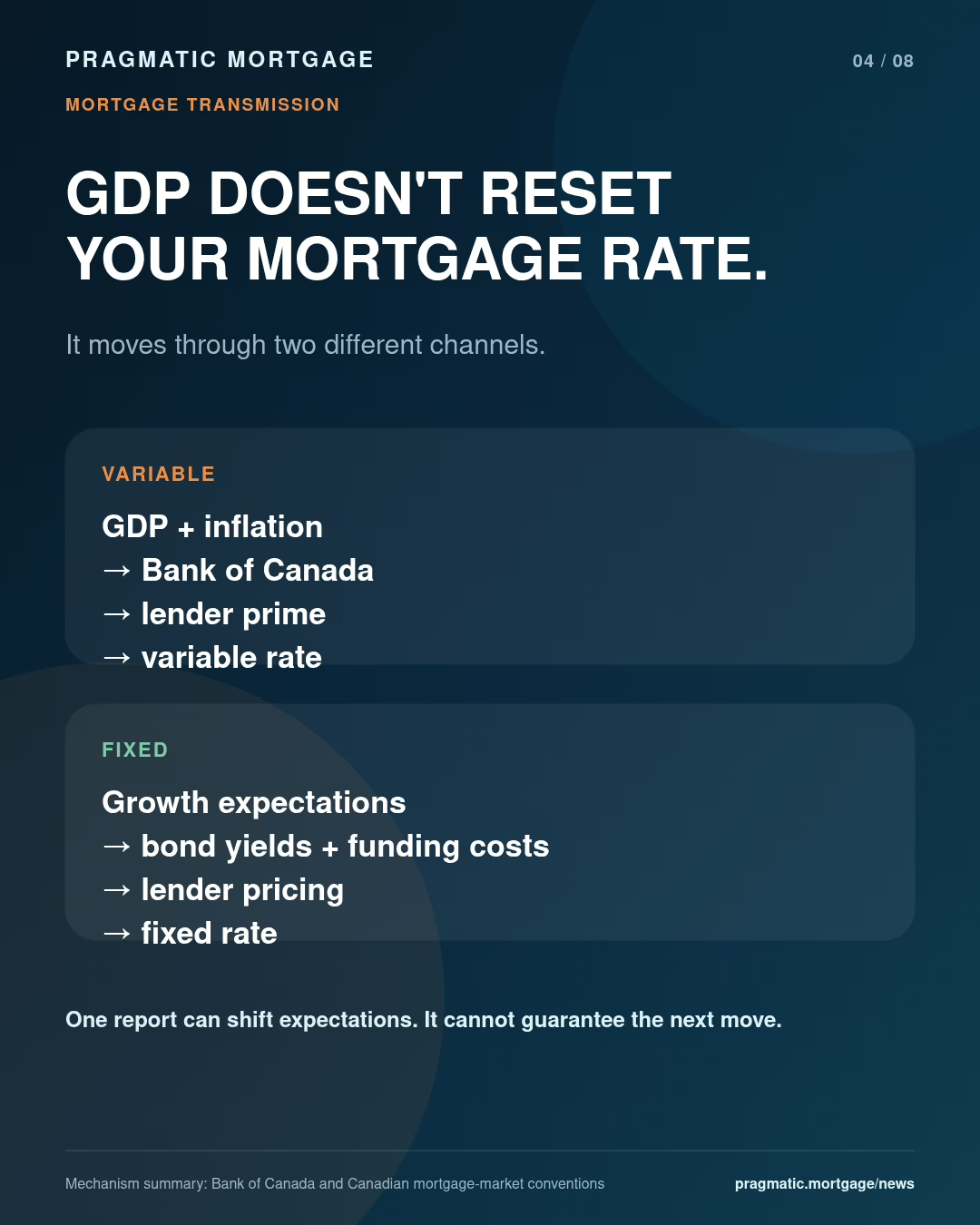
That matters differently for variable and fixed mortgages
- Variable-rate mortgages are most directly linked to lender prime rates, which usually move when the Bank of Canada changes its policy rate. A stronger economy can reduce the immediate case for a cut; it does not automatically cause a hike.
- Fixed mortgage rates are priced more heavily from Government of Canada bond yields, lender funding costs, competition and product-specific risk. Bond markets can react before the Bank moves, so fixed rates may change even when the overnight rate is unchanged.
In plain English: “GDP up” does not translate mechanically into “mortgage rates up” or “mortgage rates down.” Markets weigh growth together with inflation, jobs, wages, trade risks and the Bank's forward guidance. Anyone presenting a single-data-point forecast with certainty is selling confidence the evidence cannot support.
Housing demand is firming—but Canada is not one market
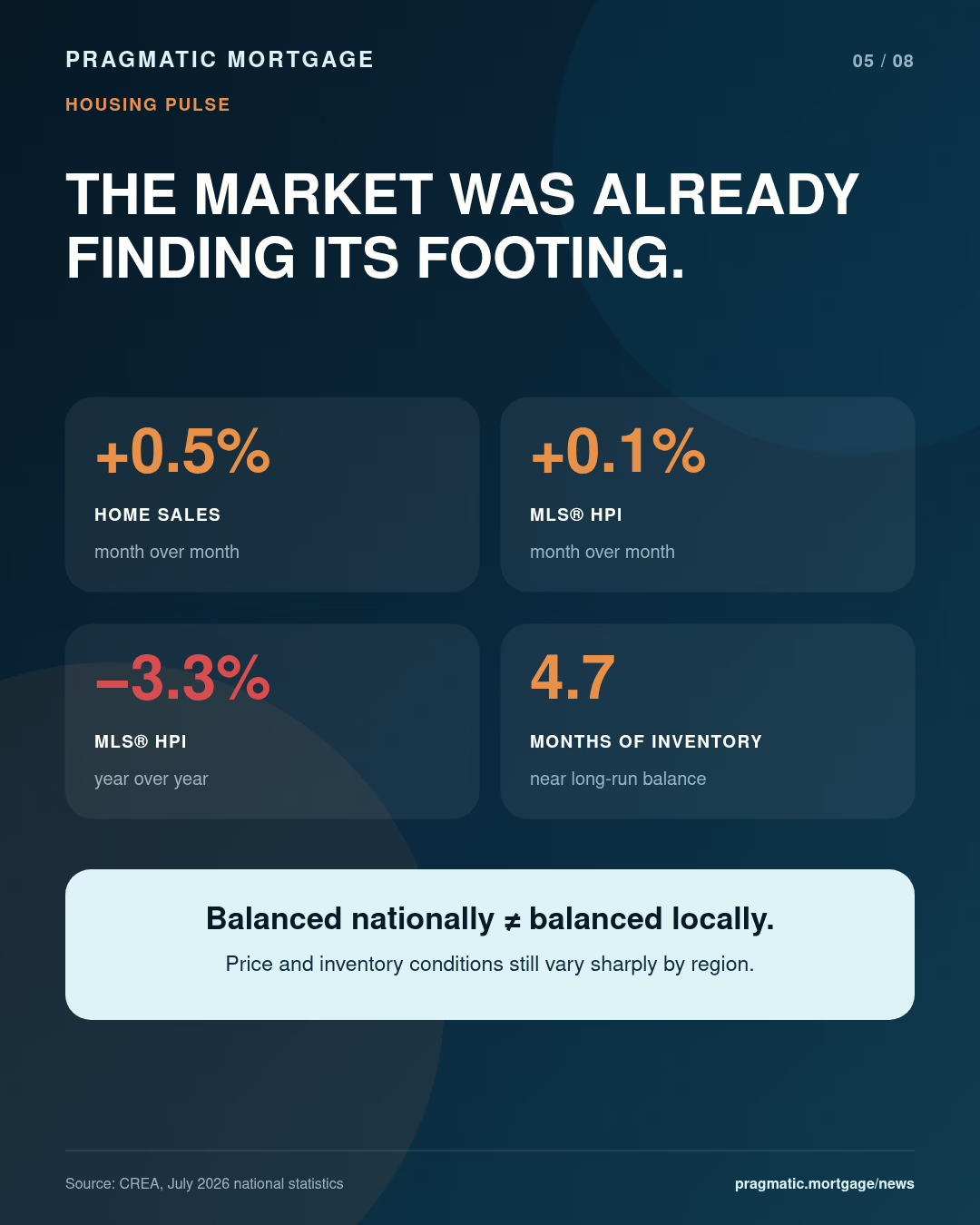
The newest national resale data show stabilization, not a frenzy. CREA reported that July home sales rose 0.5% month over month, the fourth consecutive monthly gain.
The national MLS Home Price Index edged up 0.1%—its first monthly increase since November 2024—but remained 3.3% below a year earlier. The average transaction price was $674,819, up 0.2% year over year.
With 4.7 months of inventory and a sales-to-new-listings ratio of 51.3%, the national market sat in balanced territory.
Those national measures can conceal very different neighbourhood conditions.
A balanced Canadian average does not guarantee buyer leverage in a scarce Toronto pocket, nor seller leverage in a market with rising listings.
Financing decisions still need local comparables, property type and a realistic closing timeline.
Stronger employment and income growth can improve confidence and qualification. But if better economic news also holds borrowing costs higher for longer, part of that demand support can be cancelled by affordability.
This is why growth is constructive for housing without being an automatic price accelerator.
Supply is the quieter constraint
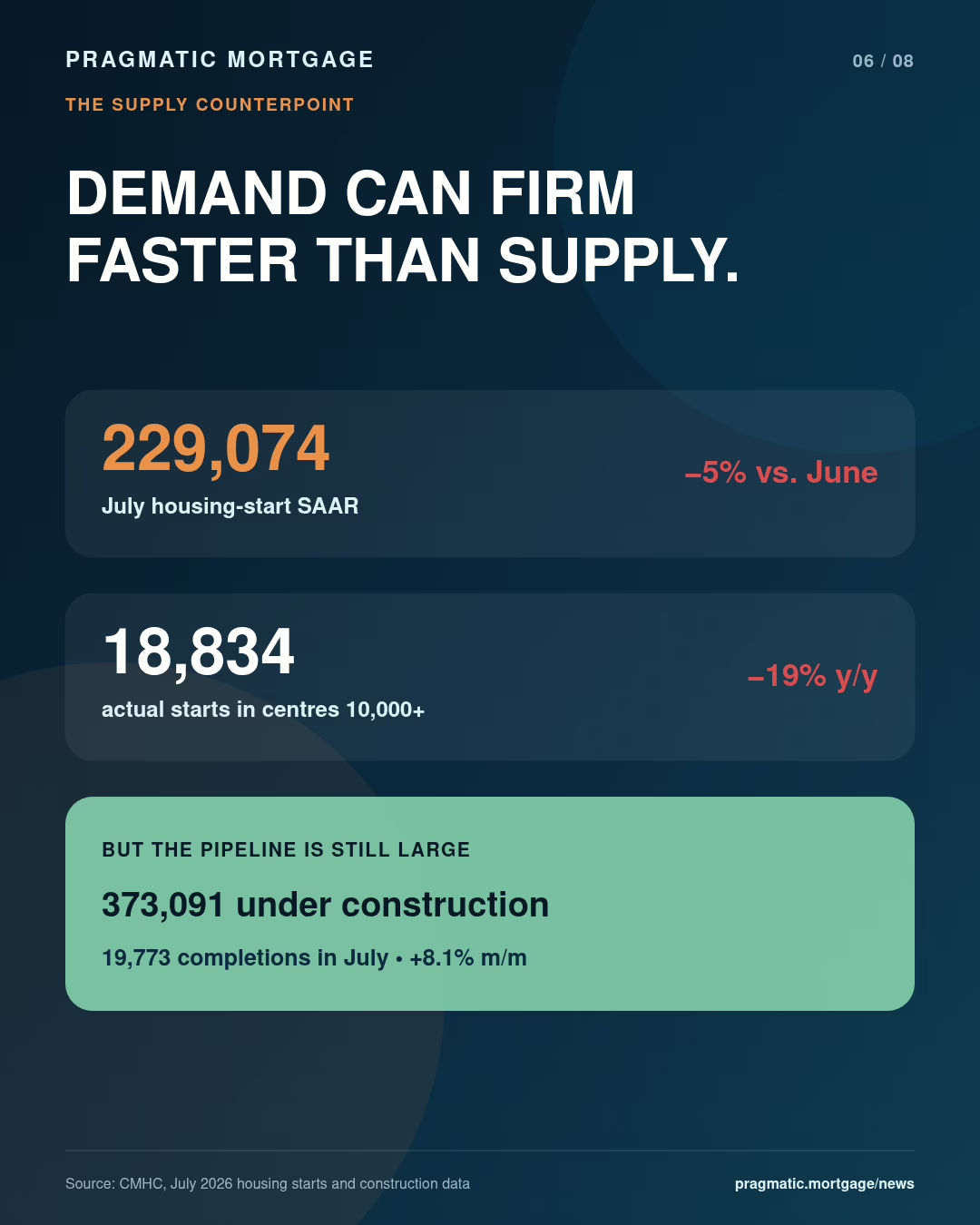
CMHC's July data show why a healthier economy cannot solve housing affordability on its own. The seasonally adjusted annual rate of housing starts fell 5% from June to 229,074 units. Actual starts in centres with at least 10,000 residents were 18,834, down 19% from July 2025.
There was progress elsewhere in the pipeline: 373,091 units were under construction, and monthly completions rose 8.1% to 19,773. But approved units not yet started increased to 141,480.
Financing costs, labour, approvals and project economics still determine whether plans become homes.
That creates an important tension. Demand can recover faster than new supply reaches the market. If that gap widens in a specific region, prices and rents may feel pressure even when the national resale market looks balanced.
Swipe the data: GDP, rates and housing in eight frames
Every number in this visual briefing is drawn from Statistics Canada, the Bank of Canada, CREA or CMHC. Swipe horizontally; the labels distinguish quarterly changes, annualized rates and percentage-point contributions.

What borrowers should do now
If you are buying
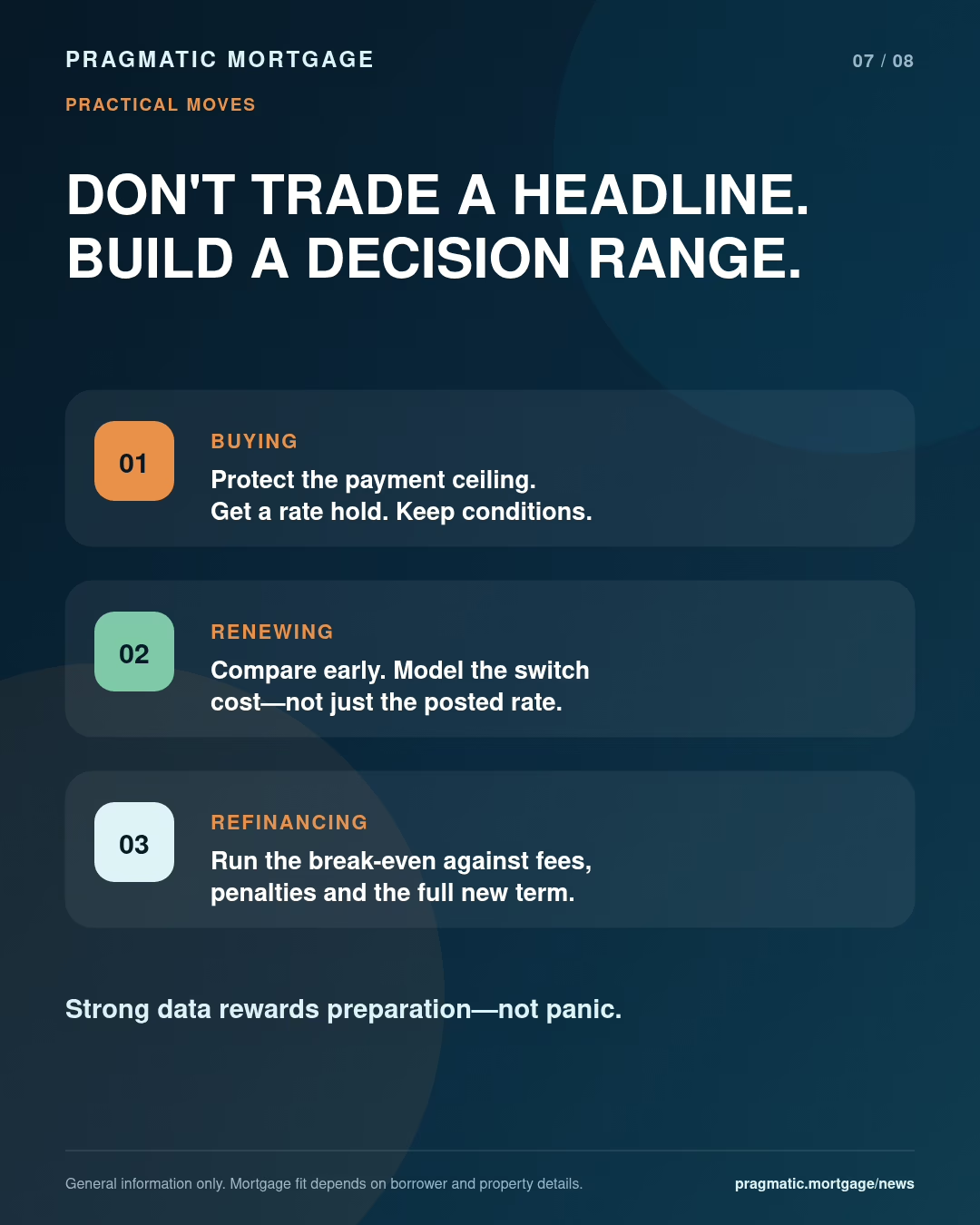
Get a rate hold where available, but treat it as insurance—not a target price. Build your offer around a payment ceiling that still works if property taxes, condo fees, insurance or maintenance rise.
Keep financing and inspection conditions unless your professional advisers confirm the risks are covered. A stronger headline is not a reason to waive due diligence.
Use our mortgage payment calculator to test more than one rate and amortization scenario, then compare current mortgage rates with the product terms behind them.
If you are renewing
Start comparing options four to six months before maturity.
The lowest posted rate is not automatically the lowest-cost mortgage: prepayment privileges, portability, penalties, refinance restrictions and discharge fees can matter more than a small rate difference.
If your renewal is near the September Bank decision, prepare both a “rates unchanged” and “market yields move” scenario rather than betting the household budget on one forecast.
If you are refinancing
Calculate the break-even point after the penalty, appraisal, legal and registration costs. Then ask what the refinance is meant to accomplish: cash-flow relief, expensive-debt consolidation, renovation funding or a shorter path to being mortgage-free. A lower monthly payment can still cost more over a longer amortization.
The bottom line
Canada's 3.3% annualized growth pace is a welcome sign that the economy carried more momentum into the summer than many feared. For real estate, it can support confidence and demand.
For mortgages, it cuts both ways: healthier growth helps households, but it may also make immediate rate relief less necessary.
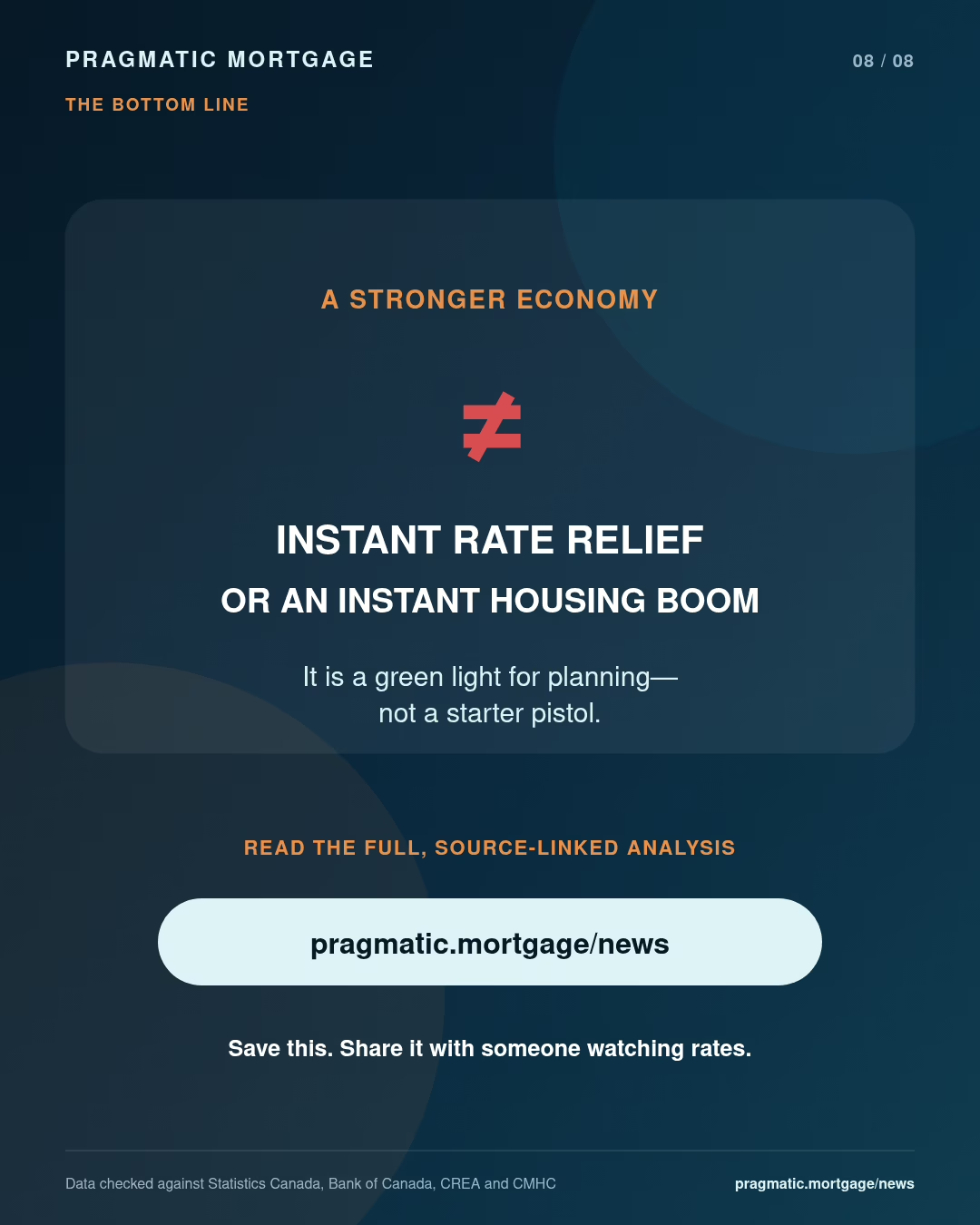
Call it a green light to prepare—not a starter pistol to overbid. The winning move is to know your payment ceiling, protect your conditions, compare the full mortgage contract and make the decision fit your life rather than the latest headline.
Want a borrower-specific read on the numbers? Book a free 45-minute mortgage strategy call. We can model the trade-offs for your purchase, renewal or refinance before you commit.
This article is general information, not financial, legal or real-estate advice. Mortgage qualification, rates and property conditions vary by borrower, lender and market.