

The Pragmatic Guide · Canadian home buyers · 7 minute read
Your down payment isn’t your whole home-buying budget.
Plan the money due before completion, the amount still needed to close, and what you want left after moving. Your deposit is usually part of the purchase price—not an extra down payment.
Sources checked September 12, 2026 · Editorial contact: Dinah Caporusso
01 / Know before you buy
One budget. Three moments.
A savings target answers how much. A closing plan also answers when. Separate costs already paid from money still needed so the same expense does not appear twice.
| When | What to plan | What to confirm |
|---|---|---|
| Before completion | Deposit; inspection and other upfront costs that apply | Contract deadline, who receives the funds and whether the cost is already paid |
| At completion | Remaining down payment; applicable taxes, fees and adjustments | Final statement, credits and the lawyer’s or notary’s funding instructions |
| After the move | Moving, setup, immediate work and the cash buffer you choose | What you want left—not just the minimum needed to close |
Completion and possession can be different dates. Your contract and legal professional establish the timeline.
02 / Know before you buy
The deposit is earlier money—not automatically extra money.
A purchase deposit is usually credited toward the price when the transaction completes. Confirm the credit on your closing statement. The contract sets the amount and timing; there is no single deposit percentage for every purchase.
Illustration: if your planned down payment is $60,000 and a $20,000 deposit is already paid and credited, the down payment still to provide is $40,000. Applicable closing costs remain additional. These numbers demonstrate the arithmetic, not the minimum down payment or a closing-cost quote.
Do not assume a failed purchase means an automatic deposit refund. Contract terms, statutory rights and the release process matter. Ask your legal professional before relying on a refund or removing conditions.
Reference: BCFSA deposit guidance.
Try the arithmetic
What money is still needed?
All starting values are illustrative, not cost estimates. Replace them with your own figures. No information is submitted or saved.
Wider savings still needed, including moving and your chosen buffer$58,000
This is a planning subtotal, not the amount to wire. Your lawyer or notary confirms the final statement, mortgage advance, credits, adjustments and funding instructions.
03 / Know before you buy
Replace the rough allowance with real line items.
FCAC suggests preparing for upfront costs of 1.5%–4% of the purchase price. Treat that as an early planning range, not a ceiling, a lender rule or an itemized estimate. Location, property type, taxes and your transaction can change the result.
Ask for written estimates. Mark each cost as paid, still due, covered by someone else or not applicable. Confirm any lender credit in writing, including when it arrives and any repayment conditions; a later reimbursement does not fund an earlier deadline.
- Government charges: applicable transfer taxes and title or mortgage registration charges.
- Professional and lender costs: legal fees and disbursements; title insurance, appraisal or survey if required; inspection and any disclosed lender or broker fees that apply.
- Adjustments: your share of prepaid or unpaid property expenses under the contract; strata or condo items and special assessments need a specific review.
- Property-specific costs: new-home tax treatment, builder charges, insurance start date and immediate work. Ask what is included in the contract price.
Reference: FCAC home-buying costs.
04 / Know before you buy
British Columbia: plan for property transfer tax.
In British Columbia, check property transfer tax and the exact exemption rules for the buyers, ownership shares and property. Being a first-time buyer does not by itself establish that no tax is payable. Obtain a transaction-specific calculation before reducing your savings target.
Include legal, registration and lender-related costs as well as applicable tax. Confirm the current charges with your lawyer or notary before finalizing your budget.
For a new or substantially renovated home, ask your lawyer or tax adviser to confirm GST/HST, any eligible rebate, who claims it and when the benefit reaches you. Do not assume the advertised price includes every charge or that a later tax refund is cash available for completion.
05 / Know before you buy
Your funds need a route, not just a balance.
Before making an offer, discuss deposit access and the time needed to move funds from investments, registered accounts, gifts or another property sale. Ask your broker which source-of-funds documents the lender needs. Do not leave withdrawal or transfer arrangements to the final day.
As completion approaches, ask your lawyer or notary for the final amount and delivery deadline. Reconcile the deposit credit, mortgage funds, fees and adjustments. There is no universal number of days that works for every closing.
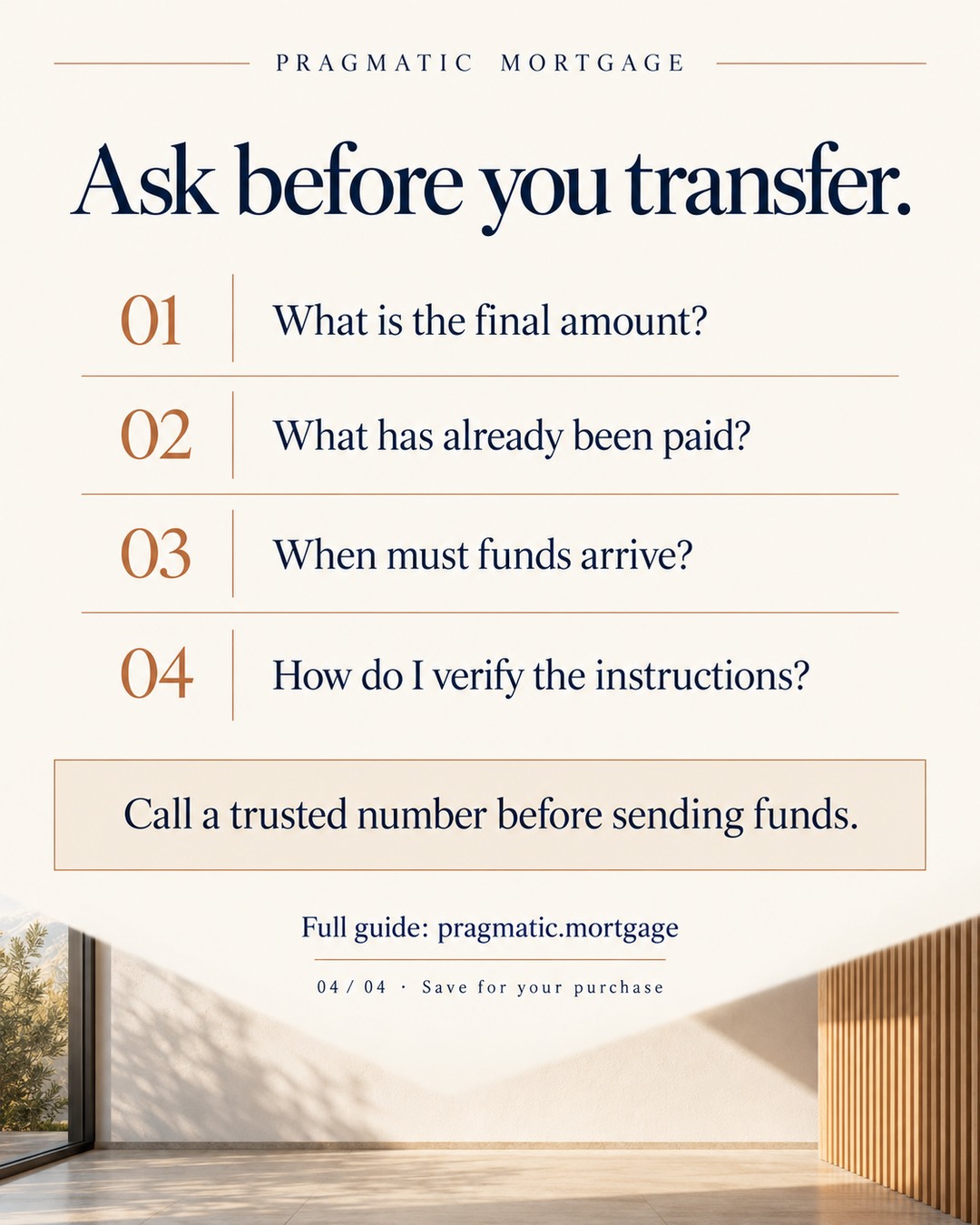
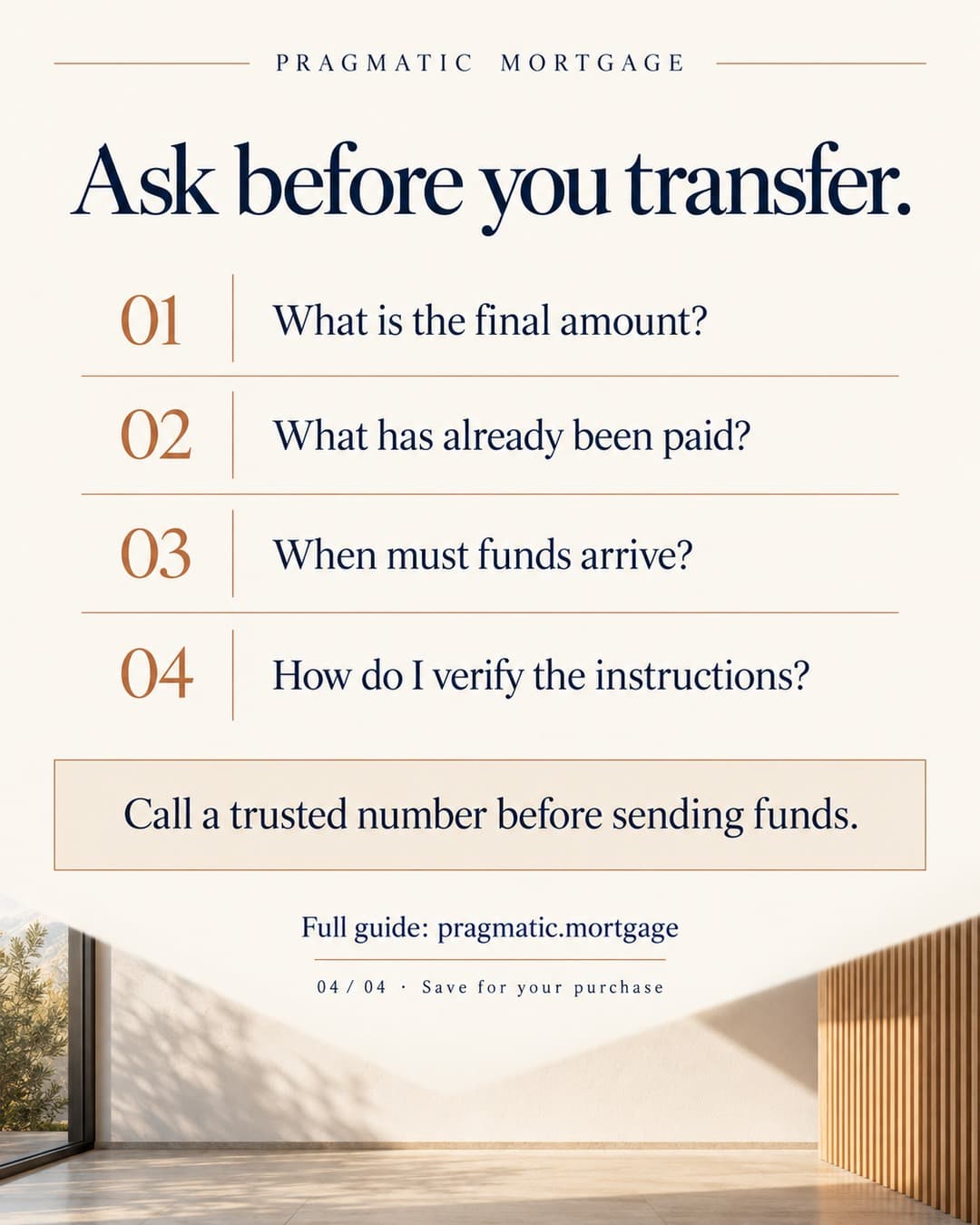
Verify payment instructions using a trusted phone number you already have—not a new number in a message requesting a change. If instructions unexpectedly change, pause and call before sending funds.
After completion, keep the final documents and confirm the mortgage payment, insurance, tax and utility arrangements. Possession follows the contract; it is not necessarily the same day as completion.
06 / Know before you buy
Send this before you send the money.
“Please confirm the final amount I must provide, the deposit and other credits already applied, which costs are still due, when cleared funds must arrive, and how I should independently verify the payment instructions.”
Bring your purchase agreement, deposit receipt and the estimates you already have to a purchase-planning conversation. Keep account numbers, statements and identification out of public social comments.
A better closing conversation
Four questions worth saving.
Keep the checklist with your purchase notes. Ask for an itemized estimate early, then confirm the final instructions before sending funds.
Clear answers
Before you make the move.
Is the deposit on top of my down payment?
Usually the deposit is credited toward the purchase price at completion and forms part of your planned down payment. Confirm the credit on the statement. The deposit amount and due date come from your purchase contract.
How much should I budget for closing costs?
Start with a rough allowance, then replace it with estimates for your province, property and transaction. FCAC’s 1.5%–4% planning range is not a guaranteed total or ceiling. Keep costs already paid, costs still due and your after-move buffer separate.
Is cash to close the same as my total savings target?
No. The final amount your legal professional asks you to provide accounts for credits and the particular closing statement. Your wider plan can also include costs paid earlier, moving expenses and a cash buffer you want to retain.
Does being a first-time buyer mean no transfer tax?
Not automatically. Each relief program has property and buyer eligibility rules, and relief may be partial. Have your lawyer or notary calculate the amount for your transaction before relying on an exemption.
Can I use an expected rebate to pay the closing bill?
Only rely on a benefit for a funding deadline after confirming eligibility, the amount and when it is actually available. A rebate or reimbursement paid later does not supply cash for an earlier deadline.
When do I receive the keys?
Follow the possession date and terms in your contract. The date ownership transfers and the date you can move in may differ. Confirm both with your real estate and legal professionals.