Skip to content

Mortgage pre-approval · BC & Alberta

You’re pre-approved.
But is the home?

Mortgage pre-approval helps establish your buying range. It does not approve every home in that range. Before an offer, get clear on three things: you, the property and the conditions still to be met.

Pre-approval is a planning step. Final approval also depends on the property and lender requirements.

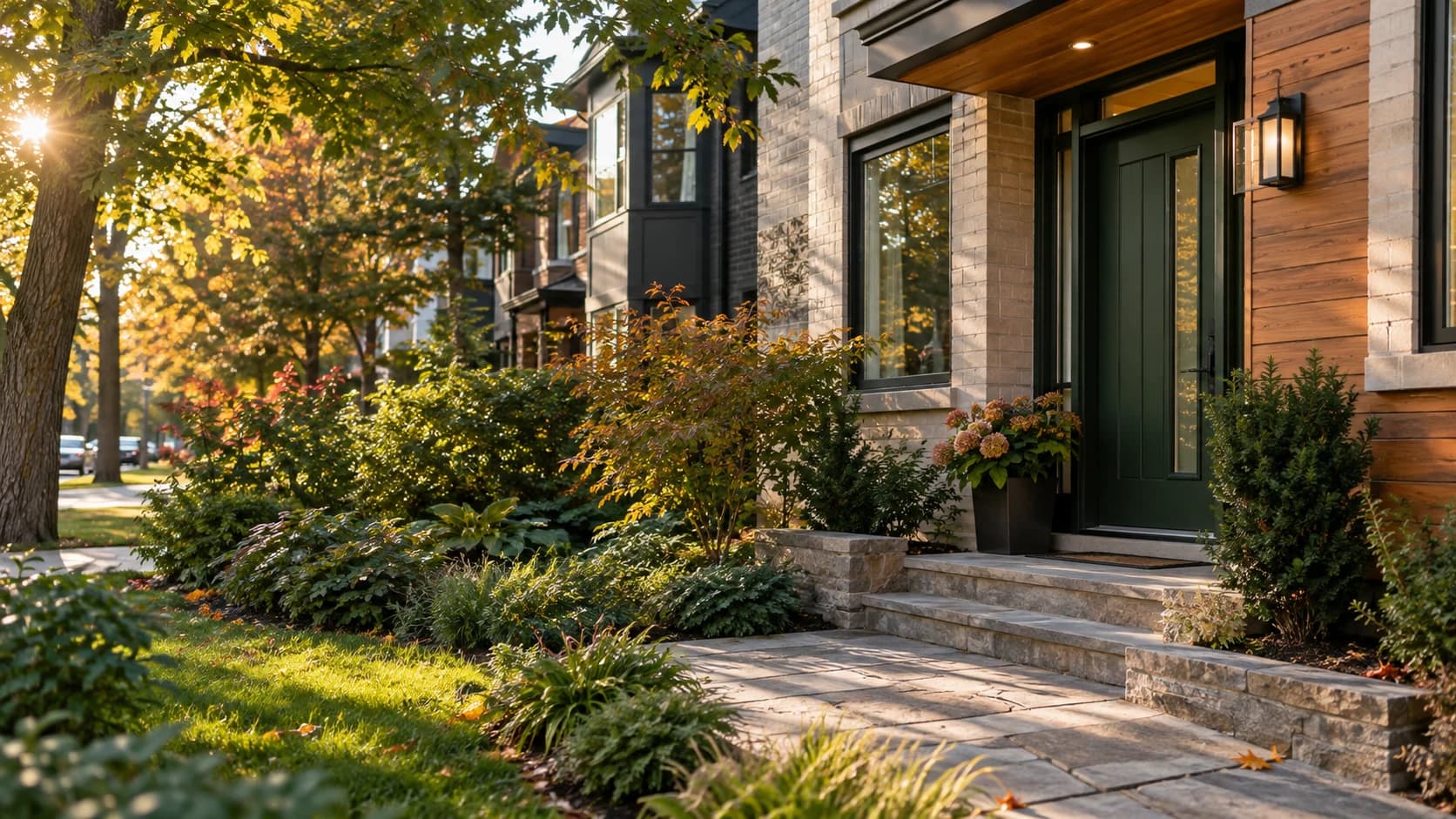
Illustrative cedar-and-brick townhouse entrance with a green door in warm autumn light
A home can feel right before its financing is confirmed. AI-generated illustrative image, not a listing.

The short answer

Your pre-approval is a starting point. Not a promise to fund.

Think of these as three questions to keep open—not three official approval stages. Lenders use different processes and conditions.

01 · YOU

What has actually been verified?

Ask which income, credit, debt and down-payment documents have been reviewed. An estimate based on information you entered is different from a file supported by current records.

Better question

“What is this buying range based on, and what could change it?”

03 · THE CONDITIONS

What remains before funding?

Get the outstanding requirements, responsibility for each and relevant deadlines in writing. A reassuring conversation is not a substitute for confirming the lender’s requirements.

Better question

“Who confirms each condition is satisfied—and by when?”

Make this useful today

Where are you in the search?

Make the budget usable before the listing is irresistible.

  1. Which documents have you reviewed, and what is still an estimate?
  2. What payment range leaves room for my other costs?
  3. When does the rate hold expire, and which property types should we discuss first?

Next conversation: Bring your income and down-payment records, current debts and target purchase timing to your broker.

A conversation guide, not an approval assessment. No personal or financial information is collected by this selector.

Understand the difference

An estimate, a pre-approval and an approval aren’t the same.

01

Prequalification

A starting estimate based on the information you provide. Useful for exploring a price range, but documents may not have been verified.

Use it for

Early planning and deciding what to discuss with a broker.

Explore an affordability estimate →
03

Final approval

A decision on a specific purchase after the lender reviews the property and completes its required conditions.

Use it for

Confirming financing with your broker and legal adviser before relying on the mortgage to close.

What goes into the number

Your complete situation matters.

Income

What you earn—and how

Salary, hourly income, commissions, contract work and self-employment may require different evidence. Stable earnings and the documents supporting them affect which lenders fit.

See self-employed mortgage preparation →
Obligations

What you already owe

Lenders include relevant debt payments and housing costs when reviewing affordability. Credit limits, other properties and support obligations can affect the result.

Explore a stress-test estimate →
Cash

Where your down payment comes from

Gather account statements and evidence for gifts, asset sales or registered-account withdrawals. Large transfers need a clear explanation and supporting records.

Plan your down payment →
Property

What you intend to buy

Location, condition, strata documents, tenancy and property type can change eligibility. A pre-approval without a property review does not confirm financing for every listing.

Follow the purchase approval process →

While you are house hunting

Keep your approval assumptions intact.

Ask before making a change that affects your income, debt or down payment.

A new car loan, employment change or large withdrawal can alter the mortgage you qualify for. Tell your broker early so the plan can be rechecked before an offer creates a deadline.

Rate holds also expire. FCAC describes lender-dependent holds ranging from 60 to 130 days; confirm the exact date and terms on your own offer.

Prepare my application

Keep this for the next home tour

Five questions worth saving.

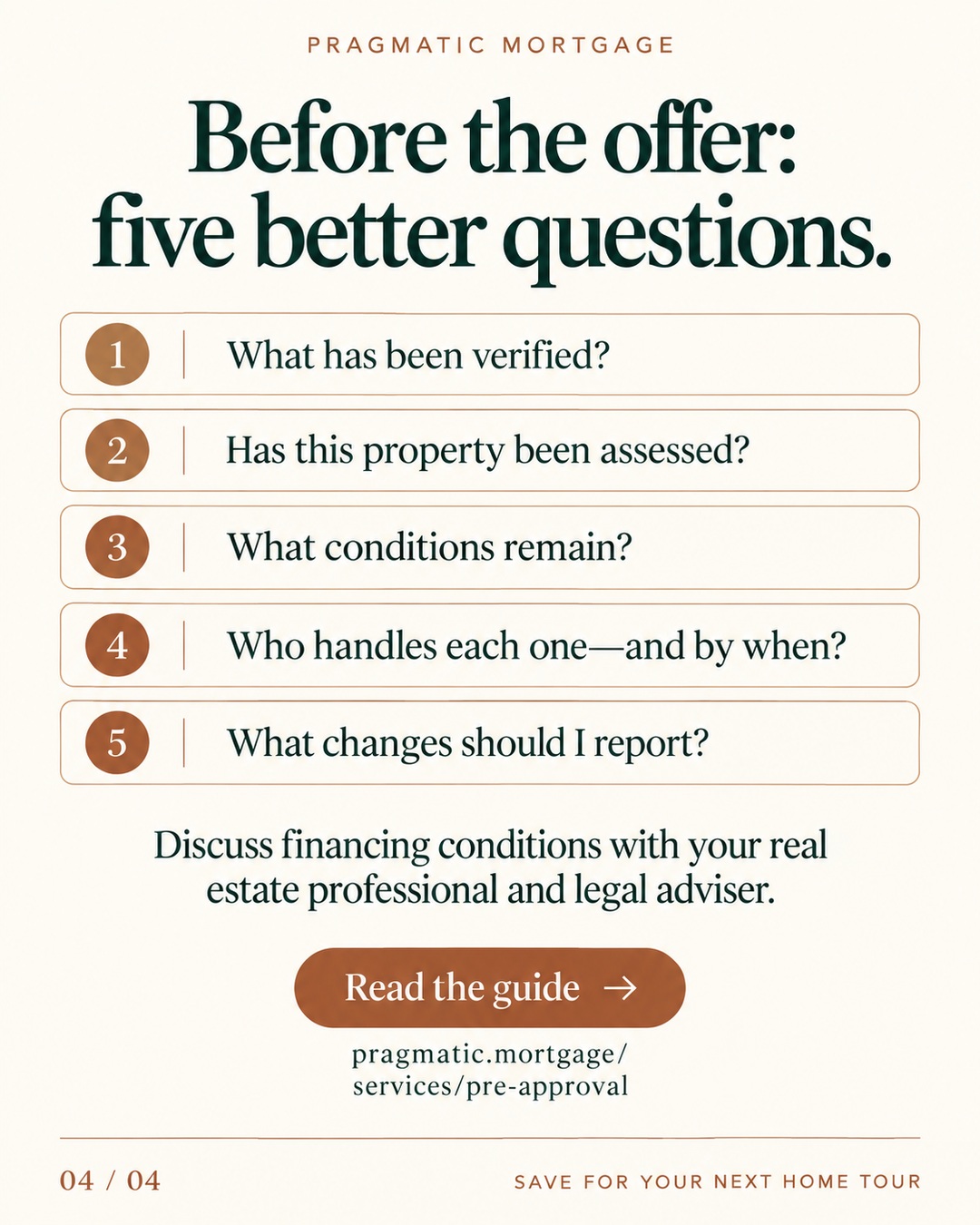
Before the offer: what has been verified, has this property been assessed, what conditions remain, who handles each and by when, and what changes should I report?

Send the listing. Ask for the missing pieces.

You do not need to know every underwriting rule. You need to know what is unresolved on your own purchase.

  1. What has been verified?
  2. Has this property been assessed?
  3. What conditions remain?
  4. Who handles each one—and by when?
  5. What changes should I report?

Discuss appropriate financing conditions and deadlines with your real estate professional and legal adviser. Completing this checklist does not mean you should make an unconditional offer or remove a financing condition.

Open the saveable checklist

AI-generated educational graphic. Text checked against the sources below; lender requirements vary.

A calmer first conversation

Get your documents ready. Keep your choices open.

A good pre-approval conversation is about the life you can afford—not only the maximum mortgage.

Bring your comfortable payment range, likely property type and purchase timing. Keep closing costs, moving costs and a reserve separate from the down payment you plan to use.

If a lender’s appraisal is below the purchase price, ask your broker what that means for financing and cash required. Do not assume a pre-approval makes up the difference.

Explore your cash-to-close estimate →

Your pre-approval starter kit

What do you have ready?

Check what you have. This list stays on this page and does not submit an application.

Your preparation checklist
0 of 4 preparation steps checked

You can speak with a broker before every item is ready. We’ll help you work out what is still needed.

Open the full document checklist →

Clear answers

Before you decide

How long does a mortgage pre-approval usually last?

It varies by lender, but many rate holds and pre-approvals are framed around roughly 60 to 130 days. The exact window depends on lender policy and your file.

Does a pre-approval guarantee financing?

No. Final approval still depends on the property, updated documents, and whether your income, debt, or down payment story has changed.

What is the difference between pre-qualification and pre-approval?

Pre-qualification is usually a rough estimate. Pre-approval is a stronger review that checks more of the file and gives you a more reliable budget before shopping seriously.

Do I need a credit check for a real pre-approval?

Usually yes. A stronger pre-approval normally includes a credit review because lenders need to verify more than self-reported numbers.

Can I get pre-approved before I choose a property?

Yes. That is the point of pre-approval. It helps you understand budget, document needs, and likely lender fit before you make an offer.

What documents should I prepare first?

Most buyers should start with photo ID, income proof, down payment statements, and current debt statements. Complex files may need more history.

Can gifted down payment funds work for pre-approval?

Often yes, but the gift letter and transfer trail need to be documented cleanly so the lender can follow the source of funds.

Should I shop at my maximum pre-approval number?

Usually no. The better target is the payment range that still feels comfortable after taxes, utilities, strata costs, and normal life expenses.


Rules & references

Sources checked September 6, 2026. Lender approval and product eligibility depend on your complete application.

How we prepare our guidance

Sources checked September 12, 2026. Prepared by Pragmatic Mortgage Lending. Editorial contact: Dinah Caporusso. Educational information, not a commitment to lend or legal advice.

Pragmatic Mortgage Lending · BC & Alberta

Shop with a clearer picture.

Let’s review the numbers and conditions behind your buying range before you commit to a home.