



TL;DR
Use this news update to make a high-quality mortgage decision using evidence, downside planning, and a clear execution process. The practical path is to compare qualification certainty, total borrowing cost, and execution reliability at the same time.
Why this matters now
Mortgage decisions now require tighter execution than prior low-volatility periods.
Borrowers who blend rate analysis with risk controls usually outperform one-dimensional rate shopping.
Clear process reduces surprises, protects timelines, and improves lender fit.
Pragmatic decision framework
- Clarify objective: lowest short-term payment, long-term flexibility, or total-cost optimization.
- Compare options across qualification, total cost, and execution certainty.
- Document assumptions and stress-test them before committing.
- Confirm every key term in writing before final acceptance.
Key signals from the research and prior article version
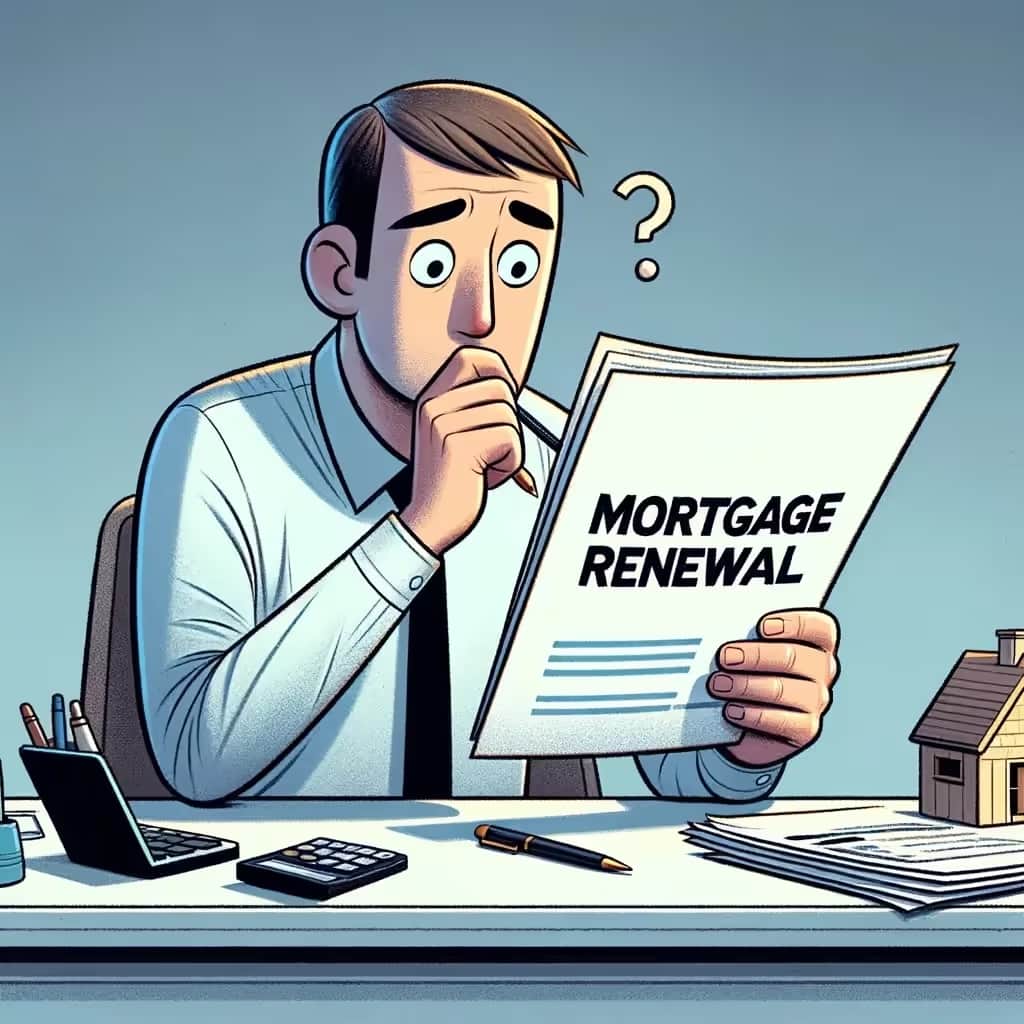
- Mortgage deselection is gaining attention due to the heightened state of upcoming mortgage renewals.
- This article aims to demystify the concept of mortgage deselection and offer guidance for those who may have concerns about their mortgage renewal.
- Understanding Mortgage Deselection Mortgage deselection refers to a lender’s decision not to renew a mortgage at the end of its term.
- Lenders, including major banks, credit unions, and mortgage finance companies, usually have policies in place to offer renewals to borrowers.
- Most often, non-renewal or “deselection” is a last resort, taken only in cases of significant risk or contract violation.
- Clarify objective: lowest short-term payment, long-term flexibility, or total-cost optimization.
- Compare options across qualification, total cost, and execution certainty.
- Document assumptions and stress-test them before committing.
- Confirm every key term in writing before final acceptance.
Detailed analysis and borrower impact
Signal 1: Mortgage deselection is gaining attention due to the heightened state of upcoming mortgage renewals. Practical implication: verify how this changes qualification reliability, payment resilience, or timeline certainty before committing.
Signal 2: This article aims to demystify the concept of mortgage deselection and offer guidance for those who may have concerns about their mortgage renewal. Practical implication: verify how this changes qualification reliability, payment resilience, or timeline certainty before committing.
Signal 3: Understanding Mortgage Deselection Mortgage deselection refers to a lender’s decision not to renew a mortgage at the end of its term. Practical implication: verify how this changes qualification reliability, payment resilience, or timeline certainty before committing.
Signal 4: Lenders, including major banks, credit unions, and mortgage finance companies, usually have policies in place to offer renewals to borrowers. Practical implication: verify how this changes qualification reliability, payment resilience, or timeline certainty before committing.
Signal 5: Most often, non-renewal or “deselection” is a last resort, taken only in cases of significant risk or contract violation. Practical implication: verify how this changes qualification reliability, payment resilience, or timeline certainty before committing.
Signal 6: Particularly, financial institution Scotiabank recently announced incoming renewal strategies that will potentially reduce their book of high-risk borrowers. Practical implication: verify how this changes qualification reliability, payment resilience, or timeline certainty before committing.
Cost, risk, and downside controls
Mortgage outcomes improve when you model downside early. Do not rely on a best-case rate or timeline assumption.
Before signing, pressure-test payment resilience, penalty exposure, and close-certainty risk under non-ideal conditions.
- Deciding too quickly without downside scenarios.
- Ignoring legal and operational conditions that affect close certainty.
- Underestimating documentation and timeline risk.
- Assuming one quote represents all lender options.
Behavioral traps that cause expensive mortgage decisions
These are the most common decision errors we see in live files, and the practical counter-move for each.
| Mental model | Typical trap | Pragmatic correction |
|---|---|---|
| Occam's Razor | Overcomplicating decisions with too many weak variables. | Focus on a small set of high-impact decision factors and execute cleanly. |
| Opportunity Cost | Optimizing one metric while sacrificing higher-value flexibility. | Evaluate what each option prevents you from doing later. |
| Regret Aversion | Avoiding action due to fear of imperfection. | Use a documented decision scorecard and commit when criteria are met. |
Implementation plan: 7, 30, and 90 days
- Within 7 days: define objective, constraints, and non-negotiables.
- Within 30 days: compare options using a single standardized scorecard.
- Within 90 days: align chosen strategy with document readiness and lender timeline.
- Before commitment: complete final risk review and fallback plan.
Scenario planning prompts
Scenario 1: If your timeline compresses, which option still closes cleanly? Build a response path before this scenario happens.
Scenario 2: If costs rise modestly, which option still fits your resilience threshold? Build a response path before this scenario happens.
Scenario 3: If your priorities change post-close, which contract preserves flexibility? Build a response path before this scenario happens.
Questions to ask before you commit
- Which assumptions in my plan are most likely to fail under stress?
- What specific lender terms could raise total cost even if the headline rate looks attractive?
- Do I have complete, clean documents ready for underwriting today?
- If timelines shift, what is my fallback path that still protects closing certainty?
- What would make this strategy obviously wrong, and how will I detect it early?
Publication details
Published 2023-12-12. Last updated 2026-02-21.
This page was rewritten as part of the canonical CMS content rebuild, with a practical borrower-first structure and updated source references.
Best next step
Use this framework to make a deliberate mortgage decision instead of a reactive one.
If your file has multiple constraints (income variability, debt pressure, short timelines, or penalty complexity), convert this page into a documented action plan before selecting a lender.
FAQ
What is the most pragmatic way to compare mortgage options?
Use one scorecard across all options: qualification certainty, total cost, penalty risk, and closing reliability.
When should I ask for broker support?
Ask early when complexity, timing pressure, or uncertainty is high. Early planning generally creates better outcomes and fewer rework loops.
What is the most important takeaway from Mortgage Deselection: Navigating Economic Uncertainties?
Mortgage deselection is gaining attention due to the heightened state of upcoming mortgage renewals. Particularly, financial institution Scotiabank recently announced incoming renewal strategies that will potentially reduce their book of high-risk borrowers. Focus on qualification certainty, total cost, and timeline r…
How does this affect qualification and approval risk?
Use the decision framework in this page to stress-test debt-service, documentation quality, and lender policy fit before submitting a final commitment.
What should I verify with a lender or broker before acting?
Verify penalty structure, document requirements, closing timeline, and any assumptions that materially change payment or approval certainty.
What is a common mistake borrowers make on this topic?
Deciding too quickly without downside scenarios.
How do I convert this guidance into action this month?
Within 7 days: define objective, constraints, and non-negotiables. Within 30 days: compare options using a single standardized scorecard.
What evidence should I keep in mind from this article?
Mortgage deselection is gaining attention due to the heightened state of upcoming mortgage renewals.
Sources
Common mistakes and preventive controls
- Making a decision off one quote without scenario comparisons.
- Skipping the document-readiness check until late in the process.
- Underestimating legal, appraisal, and timeline dependencies.
- Focusing on rate only and ignoring penalty architecture.
- Failing to define a fallback strategy before committing.
Borrower scorecard template
| Decision area | Evidence to verify | Pass/Fail |
|---|---|---|
| Qualification certainty | Stress-tested debt-service math and complete documents | _____ |
| Total cost | Rate + fees + penalties + expected hold period economics | _____ |
| Execution reliability | Clear timeline, owner, and condition closure plan | _____ |
| Downside resilience | Fallback path for appraisal, rate, or income shocks | _____ |
Commit only when all rows are pass with documented evidence.
