
Skip to content

New construction mortgage

A construction mortgage built around your timeline, not a lump sum.

A construction draw mortgage in Canada releases funds in stages as your home is built, with interest charged only on the money drawn so far — not the full loan amount upfront. Lenders inspect each phase before advancing the next draw, which keeps the builder accountable and the loan aligned with real construction progress.

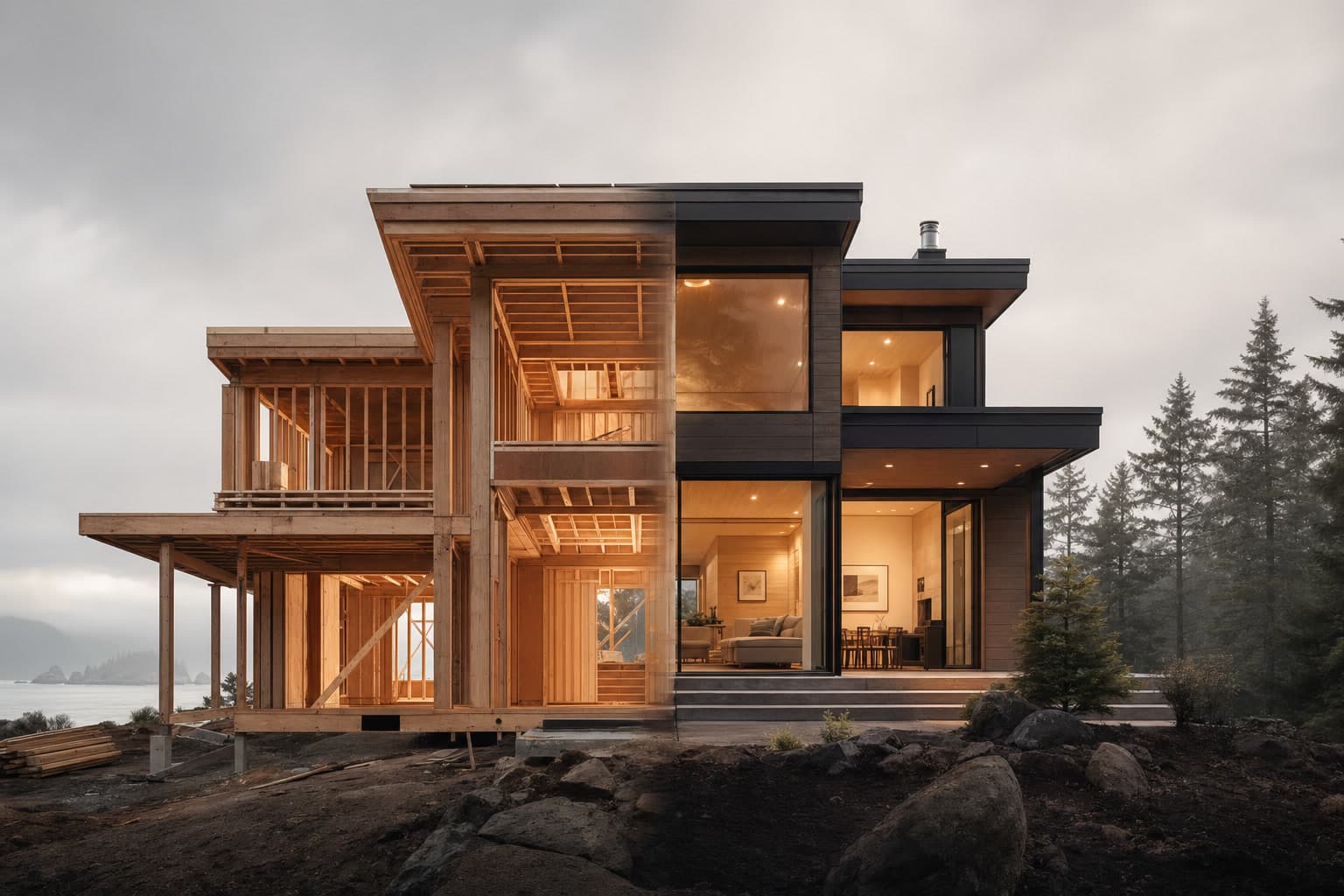
A custom modern home mid-construction at golden hour, exposed timber and steel framework rising from a forested Pacific Northwest landscape.

Builder-ready financing

A well-structured draw schedule keeps your builder funded, your project on pace, and your interest costs aligned with real construction progress.

Draw schedule

Funds released at each milestone, interest only on drawn amounts.

Rate lock

Up to 12-month rate protection while your home takes shape.

Conversion

Rolls into a standard mortgage after final inspection and occupancy.

Answer first

How does a construction draw mortgage work in Canada?

A construction draw mortgage in Canada releases funds in stages as your home is built, with interest charged only on the money drawn so far — not the full loan amount upfront. Lenders inspect each phase before advancing the next draw, which keeps the builder accountable and the loan aligned with real construction progress. The practical result is a financing structure that protects the borrower, the builder, and the lender at every stage — from foundation excavation through to the occupancy permit.

Construction draw schedule

Each draw milestone funds the next phase, not the whole project at once.

A typical five-phase Canadian construction draw schedule. Percentages are approximate and negotiated between lender, borrower, and builder before construction begins. Interest is charged only on money already drawn.

1Phase 1

15% of loan

15% cumulative

Land & Foundation

The initial draw covers land acquisition (if not already owned) and excavation, footings, and foundation work. This gets the site prepared and the substructure in place before vertical construction begins.

  • Land secured or already owned
  • Excavation and site preparation complete
  • Footings poured and inspected
  • Foundation walls completed and waterproofed
2Phase 2

25% of loan

40% cumulative

Framing & Shell

Once the foundation passes inspection, the next draw covers framing, roof structure, exterior sheathing, windows, and exterior doors. The building envelope is largely sealed at this stage.

  • Floor, wall, and roof framing complete
  • Roof sheathing and underlayment installed
  • Windows and exterior doors installed
  • Building wrap or weather barrier applied
3Phase 3

25% of loan

65% cumulative

Lockup & Rough-Ins

With the envelope secure, this draw funds the rough mechanical systems — plumbing, electrical, HVAC — plus exterior finishes like siding or brick. The home reaches lockup stage.

  • Rough plumbing complete and pressure-tested
  • Rough electrical wiring and panel installed
  • HVAC ductwork and rough-in complete
  • Exterior siding, brick, or stucco underway
4Phase 4

25% of loan

90% cumulative

Interior Finishing

This draw covers insulation, drywall, interior doors, trim, flooring, cabinetry, tile work, painting, and fixture installation. The home starts looking finished inside.

  • Insulation and vapor barrier complete
  • Drywall hung, taped, and sanded
  • Interior doors, trim, and baseboards installed
  • Cabinetry, countertops, and flooring complete
5Phase 5

10% of loan

100% cumulative

Completion & Occupancy

The final draw is released after final inspections, occupancy permits, a lender-ordered appraisal, and confirmation that the build matches the original contract and specs.

  • All mechanical and electrical finals passed
  • Final building inspection and occupancy permit
  • Lender-ordered final appraisal confirms value
  • Builder's lien holdback period satisfied or cleared
Abstract architectural visualization of construction phases progressing from foundation to completion.

Draw timing

Each draw typically takes 5–10 business days after the lender inspection confirms the milestone is complete.

Interest during construction

You pay monthly interest only on drawn amounts. If only the foundation draw ($60,000 of a $400,000 loan) has been advanced, interest is calculated on $60,000 — not $400,000.

Contingency reserve

Every construction budget needs 10–15% set aside for unexpected costs. Lenders look for this before approving the draw schedule.

5.0 average
87 reviews
Read all reviews

Google reviews

Builders and homeowners trust construction financing when the draw schedule makes sense

Recent Google reviews from clients who needed construction mortgage advice that respected the build timeline, the budget, and the builder relationship.

Benjamin Foster

Benjamin Foster

Jun 2024

Google
5.0

Kyle helped my wife Bailey and I get into our first apartment here locally in Kelowna. I had lots of questions well before the process and Kyle walked us through all of them to make us feel ready and secure to know we we...

Kelowna Mortgage Broker | Kyle WilsonView Kelowna Mortgage Broker | Kyle Wilson on Google
Craig Mihaychuk

Craig Mihaychuk

Jun 2024

Google
5.0

Jessica was a pleasure to deal with at Pragmatic. She put in many extra hours in finding us the best mortgage to suit our needs. The whole team is extremely knowledgeable and so friendly, a true pleasure to work with.

Kelowna Mortgage Broker | Kyle WilsonView Kelowna Mortgage Broker | Kyle Wilson on Google
Darnell Reimer

Darnell Reimer

Dec 2021

Google
5.0

Kyle and his team are amazing! They helped answer all of our questions and explain situations in easy to understand ways. Super responsive and up do date on current market making sure we got what was best for us. Would h...

Kelowna Mortgage Broker | Kyle WilsonView Kelowna Mortgage Broker | Kyle Wilson on Google
Sarah Schauerte

Sarah Schauerte

Sep 2021

Google
5.0

Kyle was super great in handling our case, being business owners for less than two years, he managed to get us in the door as far as mortgages go, he was always there to answer any questions and help explain things so we...

Kelowna Mortgage Broker | Kyle WilsonView Kelowna Mortgage Broker | Kyle Wilson on Google
Shaylee Odegard

Shaylee Odegard

May 2020

Google
5.0

Kyle was always available to answer our hundreds of questions as first time home buyers. Very efficient, super knowledgeable and felt like he always had our best interest. Made this process 100x easier to have Kyle on ou...

Kelowna Mortgage Broker | Kyle WilsonView Kelowna Mortgage Broker | Kyle Wilson on Google
Ash Helm

Ash Helm

Feb 2018

Google
5.0

Kyle went above and beyond. I would recommend him to everyone. He's easy to get in contact with, personable, helpful and very hardworking.

Kelowna Mortgage Broker | Kyle WilsonView Kelowna Mortgage Broker | Kyle Wilson on Google

What changes with a draw schedule

Without a draw mortgage, you are paying interest on the full build before a single wall is framed.

A standard lump-sum construction loan charges interest on the entire approved amount from day one — even when only the foundation has been poured. With a progress draw mortgage, interest accrues only on money that has actually been drawn. On a $500,000 build spanning 10 months, that can mean tens of thousands in saved interest before you move in.

Lump-sum loan: interest on full $500,000 from day one

Draw mortgage: interest starts at ~$75,000 and grows only as each phase completes

Which construction path

Three ways to finance a new home build in Canada — pick the one that matches your project.

The right construction mortgage depends on whether you are building custom, buying from a builder, or developing multiple units. Each path comes with its own draw schedule, qualification requirements, and interest structure.

1

Progress draw mortgage

The standard for custom and self-build projects. Funds are advanced at each construction milestone after lender inspection, with interest charged only on drawn amounts.

Strength

Interest costs stay low during construction because you only pay on what has been drawn. The inspection schedule keeps the builder accountable to the original plan.

Watch for

Each draw requires a lender inspection and an appraisal update in some cases. Delays between draws can slow the project if paperwork is not managed proactively.

Best for

Custom builds, self-builds, and major renovations where construction will take 6–18 months.

2

Completion mortgage

Standard financing for a purchase from a builder where the home is already finished or near completion. The full mortgage funds at closing like a conventional purchase.

Strength

Simple, fast, and well understood by all parties. You move in when the home is ready and the full loan funds at that point — no draw schedule needed.

Watch for

You may need a deposit during construction, and the builder finances their own carrying costs which can be reflected in the purchase price.

Best for

Buying a spec home, a completed new build from a developer, or a builder's model home.

3

Builder mortgage

A specialized facility for professional builders developing multiple units or spec homes. Financing covers land, construction, and carrying costs with draws tied to project milestones.

Strength

Structured for volume and speed across multiple projects. Experienced builders can negotiate draw schedules that match their construction tempo.

Watch for

Lender requirements are stricter — builders need proven track records, detailed cost breakdowns, cost-overrun contingencies, and higher equity contributions.

Best for

Professional builders, developers, and contractors building spec homes or small multi-unit projects.

From plan to occupancy

A construction mortgage follows a clear path from pre-qualification to move-in day.

Every step is designed to protect your build timeline, your builder relationship, and your financing. Here is how a typical Canadian construction mortgage unfolds.

1

1. Pre-qualification

Confirm your budget and borrowing capacity before you break ground.

We review income, credit, land equity (if owned), construction plans, and builder credentials. The goal is a clear construction budget ceiling before you commit to a builder or design.

2

2. Plan & builder review

Get your plans, cost breakdown, and builder package lender-ready.

Lenders need detailed construction drawings, a fixed-price builder contract, a cost breakdown by phase, and proof of builder experience, licensing, and insurance.

3

3. Draw schedule negotiation

Align the lender's draw milestones with your builder's construction timeline.

The draw schedule should reflect real construction progress. We negotiate the percentage per phase, inspection triggers, and advance timing so the builder stays funded and the lender stays protected.

4

4. First draw & construction start

The initial advance funds excavation and foundation work after closing.

The first draw covers land (if part of the loan) and foundation work. Interest starts only on this drawn amount. Subsequent draws require a lender inspection confirming the prior phase is complete.

5

5. Ongoing draws & inspections

Each milestone triggers an inspection, then the next draw.

The builder notifies the lender when a phase is ready for inspection. The lender sends an appraiser or inspector, confirms progress, and advances the next draw — typically within 5–10 business days.

6

6. Completion & conversion

After final inspection, the construction loan converts to a standard mortgage.

Once the occupancy permit is issued and the final appraisal confirms value, the construction loan converts to a regular mortgage with your chosen term, rate, and amortization.

An architectural journey from foundation to finished home, shown as a continuous visual narrative.

Timeline note

Most construction mortgages take 6–18 months from first draw to final conversion. The draw schedule should buffer 4–6 weeks beyond the builder's estimate.

Before you break ground

The expensive part of a construction mortgage is not the rate — it is the assumption that everything will go to plan.

These are the traps that turn a well-planned build into a stressful negotiation. Read them before the first draw, not after.

Cost overruns without a contingency

The most common construction loan problem is running out of money before the final draw.

Every construction budget needs a contingency of 10–15% for unexpected costs — soil conditions, material price increases, or scope changes. Lenders want to see the contingency in the cost breakdown before approving the draw schedule. Without it, a mid-build funding gap can stall the project or force last-minute private borrowing.

Builder delays and draw timing

A draw schedule only works when construction stays on pace.

If framing takes six weeks longer than planned, the third draw is also delayed. This can create a cash flow crunch if the builder needs materials before the next draw arrives. Vet the builder's timeline honestly and build a 4–6 week buffer into the construction schedule before assuming draws will match the plan.

Appraisal shortfalls at completion

The final lender appraisal must support the total loan amount — not just the build cost.

If the completed home appraises below the total of land cost + construction cost + carrying costs, the lender may not advance the full final draw. This is especially risky in softening markets or with over-improved builds. Discuss the 'as-completed' value estimate early with both the appraiser and the lender.

GST/HST surprises

New construction in Canada means GST or HST on the build cost — and not every borrower budgets for it.

New homes are subject to GST/HST. The rebate rules depend on whether the home is owner-built, purchased from a builder, or rented out. Some builders include GST in the contract price and handle the rebate; others do not. Confirm who claims the new housing rebate and whether the listed build cost includes or excludes tax.

Builder lien risks

Subcontractors and suppliers who are not paid can register a lien against your property.

Even if you pay the builder, unpaid subtrades can lien your home. Hold back 10% of each draw as a statutory holdback under provincial lien legislation, and require lien waivers or statutory declarations from the builder before advancing the next draw.

A split visual showing careful planning on one side and a completed structure on the other, representing the gap between plan and execution.

Builder diligence

The best construction loan is one where the builder, the lender, and the draw schedule all agree before the shovel goes in the ground.

Rule of thumb

If the builder won't put the full cost breakdown and draw schedule in writing before you sign, the construction loan is not ready to close.

FAQ

Frequently asked questions about construction mortgages

Straight answers for the questions that matter most before you commit to a build, a builder, and a draw schedule.

Start your build

Let's structure your construction mortgage before the builder needs the first draw.

Bring your construction plans, builder contract, cost breakdown, and land details. We will design a draw schedule that keeps your project funded, your builder accountable, and your interest costs tied to real progress — not a lump sum.

Land equity

Already own the land? Your equity can count toward the down payment, reducing what you need in cash.

Draw protection

Lien holdbacks and inspection triggers protect you if the builder or subtrades fall behind.

Rate hold

Lock a rate for up to 12 months on a construction mortgage — protection while your home takes shape.