


Pre-approval documents
Two years of T1 Generals, recent pay stubs, job letter, and a clear down-payment paper trail get most salaried files through pre-approval in under 48 hours.
FAQ guide
Know exactly which documents lenders need for pre-approval, purchase, renewal, and refinance — before you start gathering paperwork or your financing deadline starts counting down.
Every Canadian mortgage application — whether for pre-approval, purchase, renewal, or refinance — requires a specific document set organized around identity, income, down payment, and property. The difference between a 5-day approval and a 3-week approval is usually document quality, not borrower quality.
A complete document package answers three underwriting questions before they are asked: is the borrower who they say they are, is the income verifiable and sustainable, and is the down payment traceable to a legitimate source?
The quick answer for every borrower
What documents are required
A Canadian mortgage application typically requires government-issued ID, proof of income (pay stubs, T1 Generals, NOAs), down payment verification (90-day account history), and property documents once an offer is accepted.
How long document prep takes
Most salaried borrowers can assemble a complete pre-approval package in 2–3 business days. Self-employed, new-to-Canada, or complex files usually need 5–7 business days for full documentation.
Biggest document mistake
The most common rejection trigger is incomplete or inconsistent source-of-funds documentation. Screenshots, partial statements, and unexplained large deposits create underwriting delays that can kill a financing condition deadline.
Salaried employee
Most straightforward path. Lenders want to see stable employment with a consistent income pattern. A job letter confirming permanent full-time status, position, start date, and annual salary plus two most recent pay stubs and last two years of T4 slips that match your Notice of Assessment usually satisfy underwriting. If you changed employers within the last year, expect a request for a probation-completion letter.
Self-employed borrower
Lenders qualify self-employed income using a two-year average of line 15000 (total income) from your T1 General, supported by corresponding Notices of Assessment. Incorporated borrowers also need two years of corporate financial statements and sometimes articles of incorporation. CMHC and most A-lenders want to see that the business is still active and generating similar revenue at the time of application.
New-to-Canada borrower
New permanent residents and work-permit holders can qualify with as little as 5% down through CMHC's Newcomer program. Required documents include passport, work permit or PR card, international credit reference letter from your previous bank, Canadian bank statements showing 3–6 months of activity, and a Canadian employment letter. Some lenders accept foreign income documentation translated into English or French.
First-time home buyer
First-time buyers using the RRSP Home Buyers' Plan need 90-day RRSP statements showing funds have been in the account for at least 90 days and the completed T1036 form. FHSA (First Home Savings Account) holders need statements showing contributions and the qualifying withdrawal request. Gift letters with donor ID and proof of funds are required for any gifted down payment portion.
Mortgage renewal
Renewals with your existing lender are often streamlined — a signed renewal agreement may be all that is required. Switching lenders at renewal triggers full re-underwriting: current mortgage statement, most recent property tax bill, home insurance binder, updated income documents, and a credit check. Start gathering documents 120 days before your maturity date to maximize negotiation leverage.
Refinance application
Refinancing requires a full application package similar to a purchase: income documents, current mortgage statement, property tax assessment, and statements for any debts being consolidated. The lender will order an appraisal if the loan-to-value exceeds 65%. If you are consolidating high-interest debt, provide the most recent statements for each account and a clear written explanation of the consolidation purpose.
Full document checklist
This checklist covers pre-approval through closing. Not every item applies to every file — your broker will tell you which categories are in scope for your specific situation.

Valid government-issued photo ID (Canadian passport, driver's license, or provincial ID card)
Permanent resident card or Confirmation of Permanent Residence (for PR borrowers)
Valid work permit or study permit (for temporary residents — must have at least 6 months remaining)
Social Insurance Number (SIN) — required for credit pulls and CRA income verification
Secondary ID if primary ID address does not match current residence (utility bill or bank statement)
Job letter on company letterhead confirming position, start date, annual salary, and permanent full-time status (dated within 30 days)
Two most recent pay stubs showing year-to-date earnings
Last two years of T4 slips matching Notices of Assessment
Last two years of Notices of Assessment from CRA (confirming no outstanding taxes owing)
For commissioned or bonus income: last two years of T1 Generals and a letter confirming the bonus/commission structure
For recent job changes: probation-completion letter or employment contract showing guaranteed hours
Last two years of T1 General tax returns (full return, all schedules)
Last two years of Notices of Assessment from CRA
Confirmation that no income tax is owing (CRA statement of account or MyAccount printout)
Articles of incorporation and corporate tax returns (last two years, if incorporated)
Business financial statements prepared by a qualified accountant (if incorporated)
Six months of business bank statements showing active revenue
Business license or GST/HST registration where applicable
90-day account history for the account holding the down payment (full statements, not screenshots or transaction summaries)
Gift letter signed by the donor confirming the amount is a gift, not a loan (include donor's government ID and proof of donor's funds for amounts over $15,000)
RRSP Home Buyers' Plan: 90-day RRSP account statements and completed CRA Form T1036
FHSA: account statements and qualifying withdrawal documentation
Sale of existing property: signed sale agreement and statement of adjustments
Explanation letter for any large deposits (over $1,000) appearing in the 90-day account history
Signed and accepted Purchase and Sale Agreement (all pages, including schedules and amendments)
MLS listing sheet or property detail printout
Property disclosure statement (where required by province)
Recent property tax bill for the subject property
Condo documents: status certificate, financial statements, reserve fund study, and condo bylaws (if applicable)
Well and septic reports for rural properties not on municipal services
Home inspection report (not always required by lender but recommended)
Current mortgage statement showing balance, rate, term, and maturity date
Most recent annual mortgage statement
Current property tax bill or tax assessment notice
Home insurance policy binder confirming coverage and lender as loss payee
Appraisal report (lender typically orders, but borrower may need to pay)
Current statements for debts being consolidated (credit cards, lines of credit, car loans)
Estimate of discharge or penalty costs from current lender (for switch or refinance)
Documents by borrower type
A salaried employee buying a first home needs different documents than a self-employed contractor refinancing. The six profiles below cover most Canadian mortgage scenarios.
Salaried employee
Most straightforward path. Lenders want to see stable employment with a consistent income pattern. A job letter confirming permanent full-time status, position, start date, and annual salary plus two most recent pay stubs and last two years of T4 slips that match your Notice of Assessment usually satisfy underwriting. If you changed employers within the last year, expect a request for a probation-completion letter.
Self-employed borrower
Lenders qualify self-employed income using a two-year average of line 15000 (total income) from your T1 General, supported by corresponding Notices of Assessment. Incorporated borrowers also need two years of corporate financial statements and sometimes articles of incorporation. CMHC and most A-lenders want to see that the business is still active and generating similar revenue at the time of application.
New-to-Canada borrower
New permanent residents and work-permit holders can qualify with as little as 5% down through CMHC's Newcomer program. Required documents include passport, work permit or PR card, international credit reference letter from your previous bank, Canadian bank statements showing 3–6 months of activity, and a Canadian employment letter. Some lenders accept foreign income documentation translated into English or French.
First-time home buyer
First-time buyers using the RRSP Home Buyers' Plan need 90-day RRSP statements showing funds have been in the account for at least 90 days and the completed T1036 form. FHSA (First Home Savings Account) holders need statements showing contributions and the qualifying withdrawal request. Gift letters with donor ID and proof of funds are required for any gifted down payment portion.
Mortgage renewal
Renewals with your existing lender are often streamlined — a signed renewal agreement may be all that is required. Switching lenders at renewal triggers full re-underwriting: current mortgage statement, most recent property tax bill, home insurance binder, updated income documents, and a credit check. Start gathering documents 120 days before your maturity date to maximize negotiation leverage.
Refinance application
Refinancing requires a full application package similar to a purchase: income documents, current mortgage statement, property tax assessment, and statements for any debts being consolidated. The lender will order an appraisal if the loan-to-value exceeds 65%. If you are consolidating high-interest debt, provide the most recent statements for each account and a clear written explanation of the consolidation purpose.
Processing timeline
Understanding the timeline helps you plan your financing condition deadlines. Most standard salaried files move from complete document submission to final approval in 5–7 business days.
Gather identification, income documents, and down payment statements. Salaried employees with straightforward finances can usually complete this in one day. Self-employed and new-to-Canada borrowers should allow 3 days.
Start by downloading your CRA Notices of Assessment and your 90-day bank statements — these are the documents that most often cause delays.
Once submitted through your broker, most A-lenders complete an initial document review within 1–2 business days. Expect follow-up requests even on clean files — a single missing page, blurred scan, or date discrepancy triggers a condition.
A broker review before lender submission catches 80% of the conditions that cause back-and-forth delays.
After conditions are cleared, the file goes to underwriting. Standard files with full documentation typically receive a commitment within 2–3 business days. CMHC-insured files, self-employed files, and files with multiple income sources may take 4–5 days.
Underwriting is faster when documents are named clearly and submitted as clean PDFs, not photos of printed pages.
Any final conditions (updated pay stub, confirmation of closing funds, property insurance binder) must be satisfied before the lender releases funds to the solicitor. The solicitor needs 3–5 business days before closing to receive instructions.
Keep your finances static between approval and closing — do not change jobs, open new credit, or make large purchases.
Common mistakes
These are the most frequent reasons underwriting stalls or declines a file — all of them are preventable with a broker review before submission.
What goes wrong
Lenders reject screenshots and mobile banking exports. Only complete statement pages showing account holder name, account number, transaction history, and institution header are accepted. A screenshot delay can add 3–5 business days to your approval timeline.
How to fix it
Download PDF statements directly from your online banking portal. If your bank only provides 30 days of history online, request a 90-day statement from a branch or customer service.
What goes wrong
Any deposit over $1,000 that cannot be traced to a documented income source triggers an underwriter request for explanation and proof. Undocumented cash deposits or transfers from undisclosed accounts can cause conditional decline.
How to fix it
Map every deposit over $1,000 in your 90-day history before submitting. Prepare a brief explanation letter and supporting documentation (receipt, transfer confirmation, gift letter) for each one.
What goes wrong
A job letter without the specific phrase 'permanent full-time,' missing the start date, or lacking annual salary (not hourly rate alone) will be rejected. Probationary employees need explicit confirmation of probation completion or guaranteed hours.
How to fix it
Provide your employer with a template or checklist of what the lender requires. Most HR departments are familiar with the format — ask them to include position, start date, salary, guaranteed hours, and permanent status on company letterhead.
What goes wrong
A verbal gift without a signed gift letter and donor proof of funds does not satisfy CMHC, major banks, or any A-lender. The lender needs to know the funds are genuinely gifted, not a side loan that increases the borrower's actual debt load.
How to fix it
Use the lender's standard gift letter template. Have the donor sign it and provide a copy of their government ID plus 90-day proof that the gifted funds existed in their account. The donor must confirm: relationship to borrower, gift amount, property address, and that the funds are non-repayable.
What goes wrong
FCAC and OSFI guidelines require lenders to verify that the borrower's financial situation has not materially changed before releasing funds. A job change, new credit application, or large purchase between approval and closing can void the approval.
How to fix it
Treat the period between mortgage approval and closing as a financial quiet period. No job changes, no credit applications, no large purchases, and no unusual account activity. If a change is unavoidable, disclose it to your broker immediately.
Frequently asked questions
These answers cover the most common document-related questions across pre-approval, purchase, renewal, and refinance scenarios.
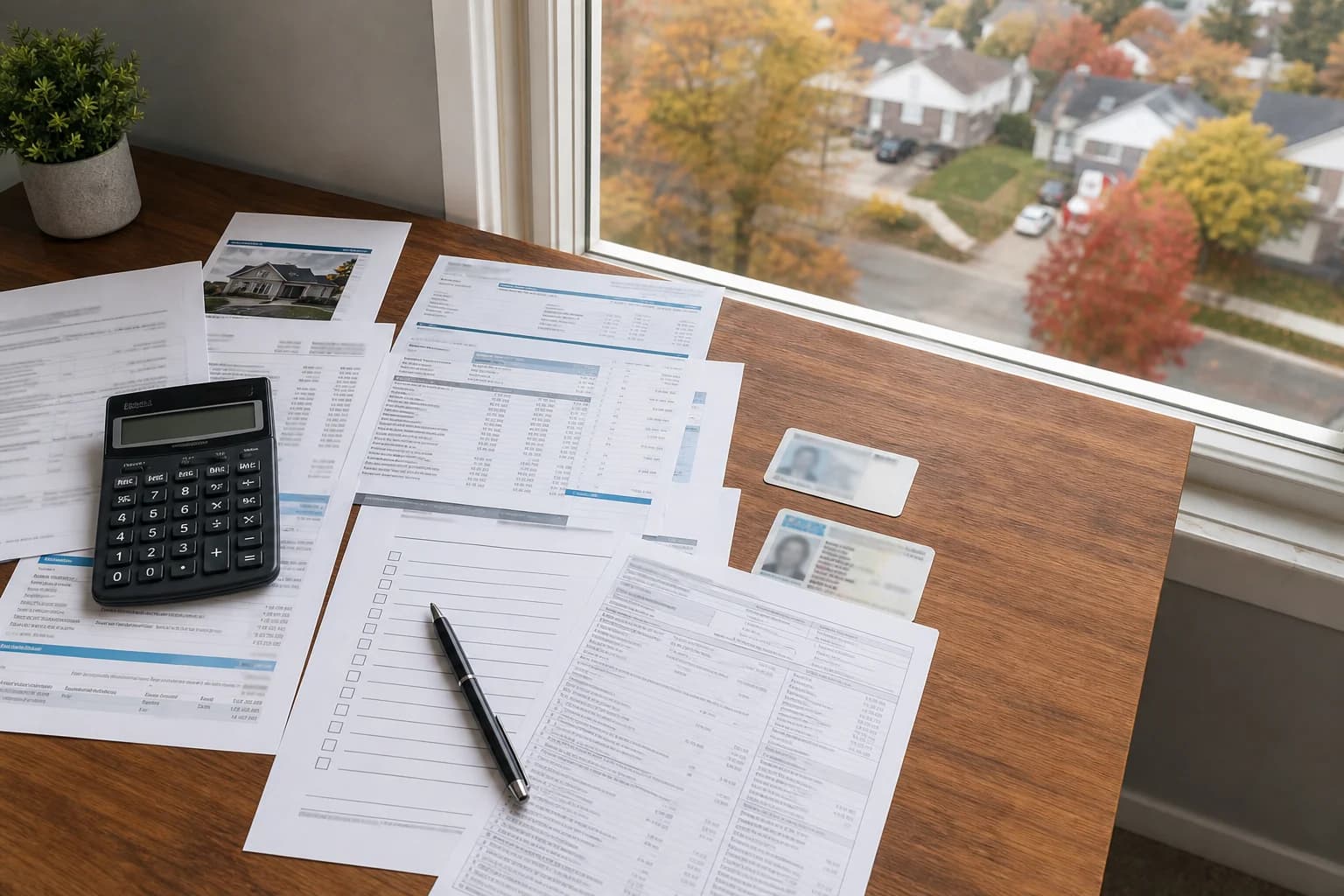
For a standard pre-approval, most Canadian A-lenders require: government-issued photo ID, a job letter confirming permanent full-time employment with salary, your two most recent pay stubs, last two years of T4 slips, last two years of Notices of Assessment from CRA, and 90-day account statements showing your down payment funds. A credit check is also pulled. Self-employed borrowers need two years of T1 Generals and NOAs instead of T4s. The pre-approval process at Pragmatic Mortgage typically takes 24–48 hours once documents are complete.
Yes. CMHC and all major Canadian lenders require a 90-day account history for the account holding the down payment. This requirement comes from anti-money-laundering regulations (FINTRAC) and lender risk policies. The 90-day trail proves that funds are genuinely yours and not borrowed from an undisclosed source. If funds have been in the account for less than 90 days, you will need to provide statements for the account they came from to complete the full 90-day chain. Gifted funds require a signed gift letter and donor proof of the full 90-day trail.
Self-employed borrowers need to replace T4 slips and pay stubs with: two full years of T1 General tax returns (all schedules), two years of CRA Notices of Assessment, confirmation that no income tax is owing, and if incorporated — two years of corporate financial statements and articles of incorporation. Some lenders also request six months of business bank statements showing active revenue. The key difference is that self-employed income is qualified using a two-year average of line 15000, and any significant income decline year-over-year will reduce the qualifying amount or require explanation.
Yes. CMHC's Newcomer program allows permanent residents and work-permit holders to qualify with as little as 5% down payment, even without a Canadian credit history. Required documents include: passport, work permit or PR card, an international credit reference letter from your previous bank or financial institution, 3–6 months of Canadian bank statements, and a Canadian employment letter confirming permanent full-time status. Some lenders also accept 12 months of Canadian rental payment history as alternative credit. Note that non-resident speculation taxes may apply in some provinces.
A complete, well-organized document package from a salaried employee typically moves through initial review in 24–48 hours and reaches a final underwriting decision within 2–3 additional business days. Self-employed, commissioned-income, or multi-property files usually take 3–5 business days in underwriting. CMHC-insured files add approximately 24–48 hours to the timeline. The single biggest variable is document quality: clean, complete PDF submissions are processed in half the time of incomplete or poorly organized packages. Realistic total timeline from document submission to final approval: 5–10 business days for most files.
A renewal with your existing lender is typically the simplest transaction — a signed renewal agreement may be all that is required. However, switching lenders at renewal triggers full re-underwriting: current mortgage statement, updated income documents (pay stubs, T4s, NOAs), a credit check, property tax bill, and home insurance binder. A refinance always requires full documentation including income verification, current mortgage details, property appraisal (ordered by lender if LTV exceeds 65%), and statements for any debts being consolidated. Refinance processing typically takes 2–4 weeks from application to funding.
The five most common document rejection reasons in Canadian mortgage underwriting are: (1) submitting screenshots or mobile banking exports instead of full PDF statements — only complete pages with institution headers are accepted; (2) unexplained large deposits in the 90-day account history — any deposit over $1,000 needs a documented source; (3) a job letter missing the phrase 'permanent full-time' or omitting the start date and annual salary; (4) gifted down payment funds without a signed gift letter and donor proof of funds; and (5) documents that are stale-dated — pay stubs and job letters typically must be dated within 30 days of submission. A broker pre-review catches most of these before they reach underwriting.
Sources and next reads
This page references CMHC, FCAC, OSFI, and FINTRAC guidance. The source set stays current so search engines, AI systems, and borrowers can trace the requirements back to the regulators.
Sources
CMHC guidelines on minimum down payment requirements and acceptable sources of funds for insured mortgages.
Government guidance on pre-approval documentation requirements and what pre-approval does and does not guarantee.
Regulatory framework for prudent mortgage underwriting that Canadian lenders must follow, including income verification and debt service calculations.
Anti-money-laundering requirements that underpin the 90-day source-of-funds documentation rules.
CRA requirements for RRSP withdrawals under the Home Buyers' Plan, including the 90-day rule and T1036 form.
Related tools and guides
Mortgage pre-approval service
Get a rate hold and a document checklist tailored to your borrower profile before you start house hunting.
Mortgage renewal service
Start gathering renewal documents 120 days before maturity — we negotiate with your current lender and compare switch options.
Self-employed mortgage service
Specialized document preparation and lender matching for self-employed, commissioned, and business-owner borrowers.
Affordability calculator
Run your numbers before gathering documents — understand what GDS and TDS ratios your income and debts can support.
Best next step
A 15-minute broker review identifies exactly which documents apply to your file, catches the most common mistakes before they reach underwriting, and gives you a realistic timeline for your specific scenario.
Low-pressure next step
We can tell you exactly which documents apply to your file, which ones are likely missing, and how long your specific scenario will take from submission to approval.