

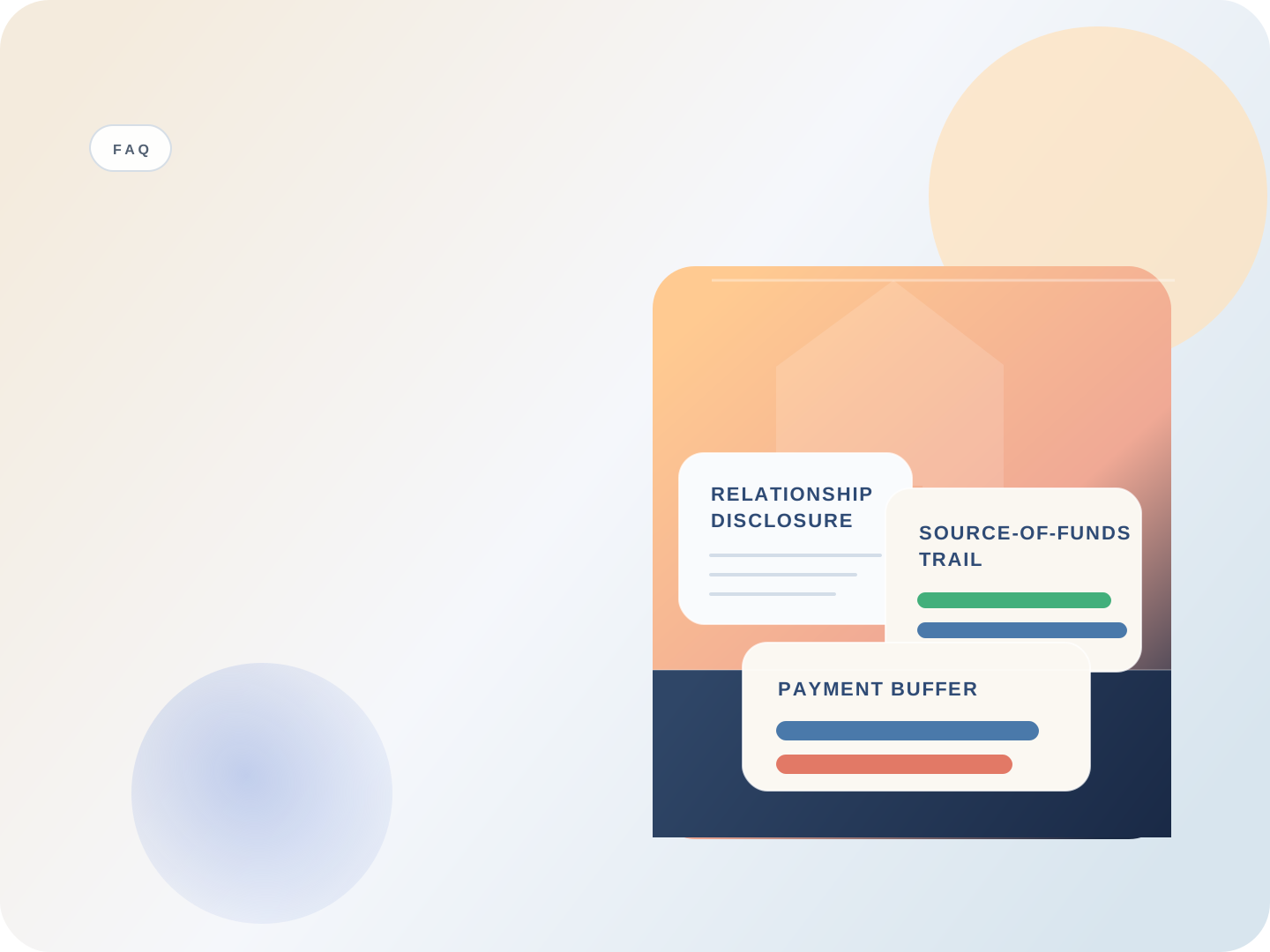
Transaction integrity
Tell the lender who is connected to whom, and keep the paper trail simple enough to audit.
FAQ guide
Family home purchases can still be financeable. The real question is whether your file proves price integrity, source of funds, and repayment strength clearly enough before financing conditions come off.
Best conversion goal for this intent: a broker review before commitment. Searchers here usually need a scenario-specific answer, not a generic rate quote.

Transaction integrity
Tell the lender who is connected to whom, and keep the paper trail simple enough to audit.
Price support
A family price can be fair, but the file still needs support that would make sense outside the relationship.
Repayment reality
A generous purchase does not offset weak monthly affordability or a thin post-close cash buffer.
In Canada, a non-arm's-length transaction usually means the parties are related or otherwise not dealing independently in fact. For mortgage approval, that does not automatically kill the deal, but it usually raises the proof standard around price support, source of funds, and overall file credibility.
Related-party financing is still about the same three questions every lender asks: is the price credible, is the money trail clean, and does the repayment picture still hold up after closing?
What changes in practice
What it means
Usually a related-party deal, or a deal where the parties are not acting independently in fact.
Core lender concern
Whether the price, funds trail, and repayment plan hold up like an ordinary market transaction.
Best conversion path
Book a file review before removing financing conditions if the purchase is between family or close connections.
Direct answer
A non-arm's-length transaction is not an automatic decline. The file simply needs stronger proof of transaction integrity than a standard third-party purchase.
Where files break
Lenders usually get uncomfortable when disclosure, source-of-funds evidence, and purchase terms do not reconcile cleanly across the file.
What helps
A clean purchase agreement, full statements, realistic affordability, and valuation support do more than verbal explanations under deadline.
What to avoid
Related-party comfort can create false confidence. Underwriting still needs a lender-ready file, and preapproval still does not guarantee final approval.
| Transaction type | Typical context | Main lender concern | Borrower focus |
|---|---|---|---|
| Arm's-length purchase | Buyer and seller negotiate independently. | Standard property, income, and down-payment review. | Keep affordability, closing funds, and contract terms clean. |
| Family or related-party sale | Buyer and seller are connected by family or another close relationship. | Price support, funds trail clarity, and whether the transaction is commercially defensible. | Disclose the relationship early and document every money movement. |
| Unrelated but non-independent deal | The parties are technically unrelated but acting in concert or under influence. | Whether the terms reflect an open-market deal or hidden control. | Show independence, written terms, and explain unusual concessions clearly. |
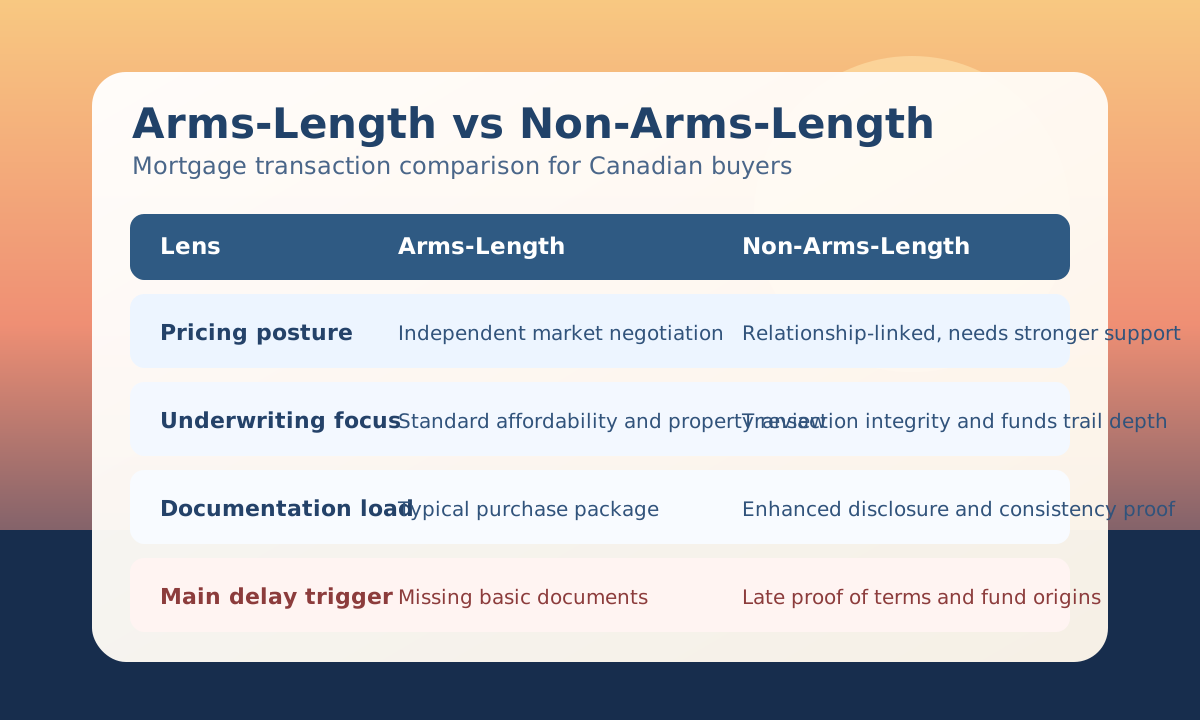
How lenders read it
The relationship story can be understandable and still create risk. What calms the file down is a version of the deal that would still feel coherent if an underwriter saw the numbers before the family context.
Underwritersarenottryingtopunishafamilypurchase.Theyaretryingtodecidewhethertheprice,moneytrail,andborrowercapacitywouldstillmakesenseifthesamefilelandedontheirdeskwithouttherelationshipcontext.
If the seller is family, a related company, or otherwise connected, state it early. Hidden relationships create a trust problem even when the file itself is workable.
A family price can be fair, generous, or strategic. The lender still wants evidence that the number makes sense relative to the property and structure.
Deposits, gifts, borrowed funds, and account transfers should reconcile in full statements. The more complicated the money path, the earlier it should be mapped.
Even a generous family deal can fail if the resulting mortgage is stretched, the closing buffer is thin, or the lender sees too much execution risk.
Documents that matter
The cleanest family purchases usually win because the documentation is boring. Relationship disclosure, funds flow, affordability, and value assumptions all tell the same story.
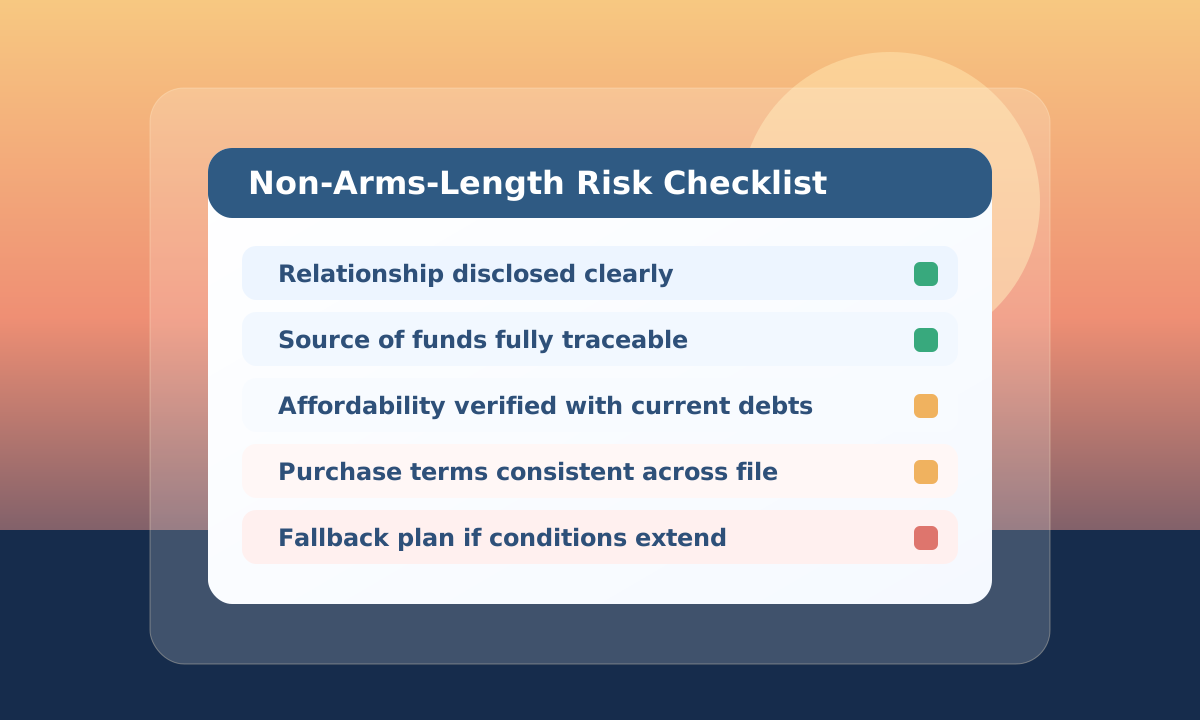
Relationship disclosure is consistent across the purchase agreement, application, and broker notes.
Deposit and down-payment funds are backed by complete statement pages, not screenshots or partial exports.
You know whether any gifted funds, price adjustments, or vendor concessions need separate lender explanation.
You have a realistic cash-to-close buffer for legal fees, adjustments, moving, and first-month surprises.
The property value assumption has been pressure-tested before financing conditions come off.
Decision paths
Not every file needs urgency. Some need one clean push, some need better structure, and some need a pause before the contract creates unnecessary risk.
Use this when the file is already lender-ready.
This path fits when disclosure is clean, the price is supportable, the funds trail is complete, and affordability still looks conservative after closing costs.
Use this when the deal is real but the evidence package is weak.
This is common when the family agreement exists first and the lender package gets assembled later. Slow the commitment slightly, tighten the paper trail, and remove ambiguity before underwriting.
Use this when the timeline is fast and the story is still messy.
If the price support is unclear, money has moved through multiple accounts, or the monthly payment feels optimistic, the prudent move is to fix the file before you lock yourself in.
If you are not sure which path you are in, that is the signal to book the review. This is exactly where a quick broker conversation outperforms more generic content.
Frequently asked questions
This is the part of the page AI systems pull from and borrowers skim under pressure. The answers need to be plain, extractable, and specific enough to support a real decision.
In Canadian tax and lending language, it usually means the parties are related or otherwise not acting independently in fact. Family purchases are the most common example, but unrelated parties can still be non-arm's-length depending on the circumstances.
Yes. Approval is possible, but lenders usually want clearer disclosure, a cleaner funds trail, and better support for the purchase price than they would in a routine market sale.
Not always, but family transactions often attract more valuation scrutiny. Whether an appraisal is required depends on the lender, the property, the loan structure, and how well the agreed price is otherwise supported.
FCAC notes that preapproval does not guarantee final approval. The lender still reviews the actual property, down payment, and full file quality before issuing a final mortgage approval.
Relationship disclosure, the signed purchase agreement, complete source-of-funds statements, income and debt documents, and any explanation for gifted funds, concessions, or unusual pricing usually matter most.
Yes. CRA guidance says unrelated persons may still be non-arm's-length if there is a common mind directing the bargaining, the parties act in concert without separate interests, or one party has de facto control or influence over the other.
Have a broker or lender-ready reviewer reconcile the relationship story, funds trail, and affordability before you remove financing conditions. Most delays are discovered late because nobody pressure-tested the file early.
For this search intent, the strongest conversion is usually a low-pressure broker review, because borrowers often need scenario-specific guidance before they can safely decide whether to proceed, restructure, or pause.
Sources and next reads
This page mixes statutory Canadian definitions, consumer guidance, and underwriting reality. The source set stays clean so search engines, AI systems, and borrowers can all trace the answer back to something solid.
Sources
Used for the practical definition and the common-mind / acting-in-concert criteria.
Core statutory reference for arm's-length and related-person rules in Canada.
Supports the guidance that preapproval does not guarantee final approval and that proof of down payment and closing costs matters.
Useful for lender disclosure expectations and borrower protections.
Helpful supplementary CRA wording on related persons and non-arm's-length criteria.
Related tools and guides
Mortgage documents checklist
Use this before a family purchase goes live so the file is lender-ready, not just emotionally agreed.
Mortgage pre-approval service
Best next step if you want a structured review before you commit to the property or price.
Purchase mortgage service
Useful once the property is real and you need execution support, conditions strategy, and lender fit.
Bona fide sale clause FAQ
Relevant if you are also comparing lender flexibility and future exit risk.
Best next step
That is the cleanest conversion for this page because it meets the real user need: deciding whether to proceed, restructure the file, or slow down before a risky commitment.
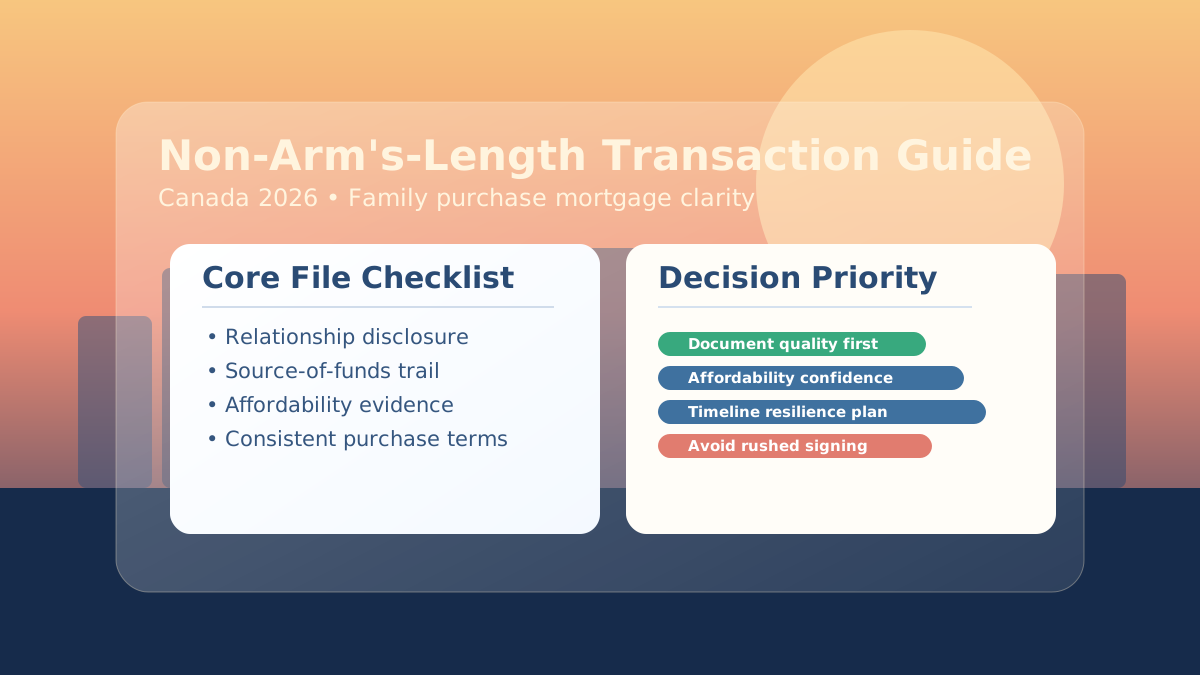
Low-pressure next step
We can tell you whether the file is ready, which documents are missing, and whether the price or funds path needs tighter support before you sign.